

YouTube Now Lets You Disable "Shorts" For Kids. Why Not AI Videos?
Who decides what is "good" video content and what is "bad" video content?

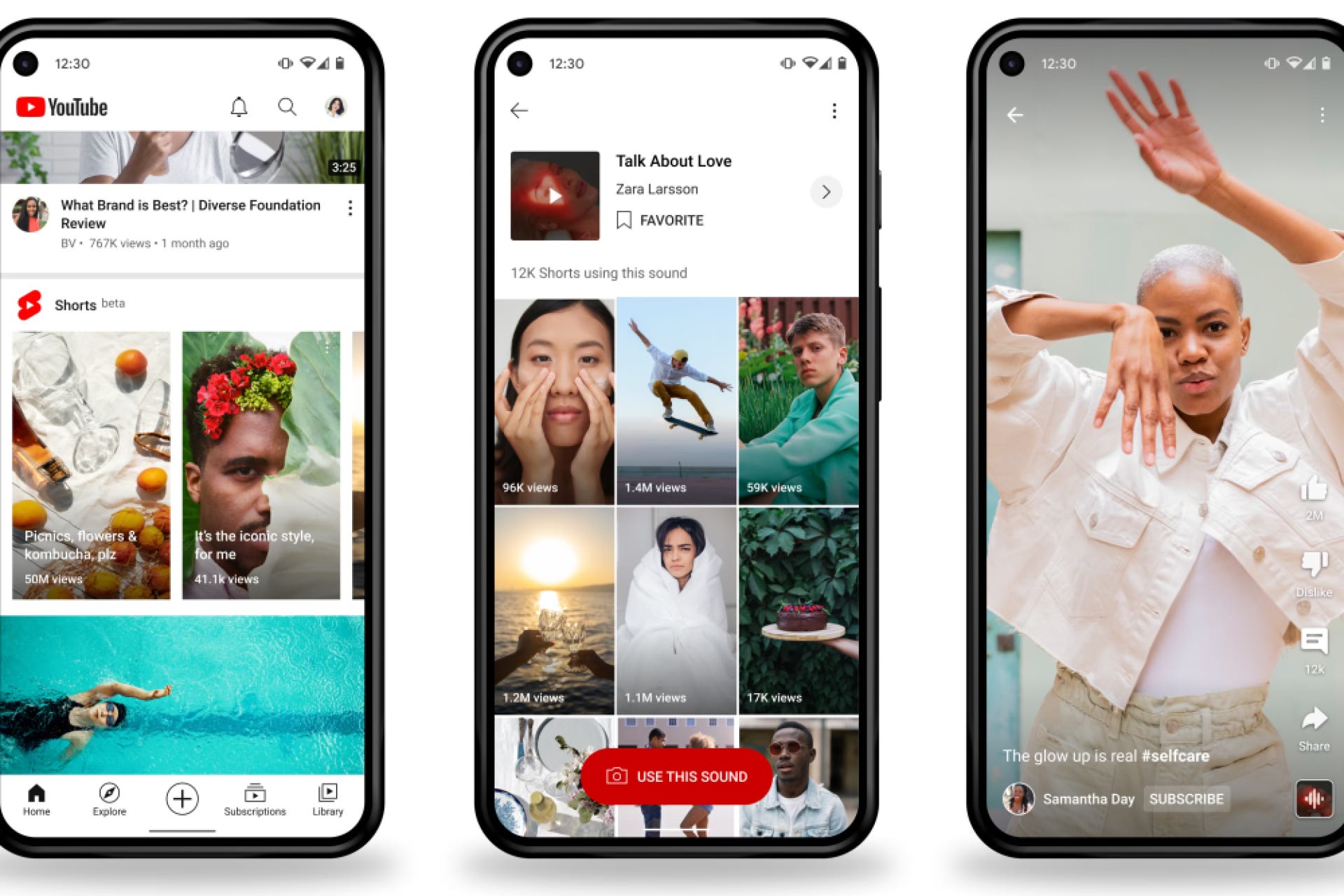
Increasingly, my nine-year-old is distracted at dinner. She is a slow eater, but the issue is a bit deeper: she’s become obsessed with YouTube Shorts, the TikTok-esque short-form videos whose format now dominates online video, be it YouTube or elsewhere.
The early evening routine with my kids is cyclical. I pick them up from daycare, and they have to mind themselves until their food is ready to eat. If the timing works, we’ll have a meal as a family. Often, the parents are out of sync with the children (they like to eat early) on weekdays, and we let them watch their tablets and find other forms of evening family bonding time—like this week, where we finished watching the first season of Stranger Things together—once bellies are full and devices are put away.
It also gives me an undistracted hour to prepare a nice meal for my wife and I! But…
“Please, eat your food.” “You’re not eating your food.” Look, even in device-free environments where she’s only focused on food, my oldest requires constant attention to find an empty plate. Meanwhile, the five-year-old has asked for seconds or thirds.
But I’ve noticed my daughter hovering her finger over the tablet, ready to stab at a new video quickly. Poke. Poke. Poke. Poke. And this observation arrives around the same time YouTube has rolled out a new parental control specific to YouTube Shorts, where guardians can limit (or ban!) how long children can specifically watch Shorts.
“This is an industry-first feature that puts parents firmly in control of the amount of short-form content their kids watch,” said YouTube VP of product management Jennifer Flannery O’Connor in a blog post about several changes to the parental controls for YouTube, including more custom “bedtime” and “break” reminders.
The Shorts options available for parents are the following:
0 minutes
15 minutes
30 minutes
45 minutes
1 hour
2 hours
Off
Previously, kids could jump between Shorts and normal YouTube.
It’d be fine if my child was indulging in Shorts as a complimentary form of wasting time, but it’s exclusive. I do not think Shorts are “bad” and will “rot your brain,” a take that feels like millennial-coded boomer culture than anything else. Instead, moderation is critical, especially in a world where young people’s every impulse can be indulged.
I decided to set my nine-year-old’s limit at 15 minutes. She noticed immediately. The difference between Shorts time limits and, say, screen time, is that you cannot extend Shorts’ time limitations on a one-time basis. “Sorry, Dad, I was just finishing up one video” doesn’t work, because it means I need to dig into the YouTube settings on Google’s (admittedly good) Family Link app and permanently change it from 15 minutes to 30 minutes. Not a great system—please let us extend time temporarily!!
However, 30 minutes per day is where we’ve ended up. She wanted more, I wanted less, and I’ve already noticed that her dinners are being finished faster than before.
Win?

Even if every parent does not use it, more controls are good. These kinds of specific control are very good. It spans all kinds of situations, context, and lets you turn it off!
It got me thinking: Could YouTube give me the same control with AI videos, too? Short-form videos are where the vast majority of AI slop videos are showing up.
“We do not plan to extend the Shorts feed timer to manage AI content,” said a YouTube spokesperson.
Can’t manage AI content? Or won’t manage AI content? Hard to say, but the latter seems likely; the company told me it’s “focused on connecting our users with high-quality content, regardless of how it was made, including for our youngest users.”
AI videos are everywhere. I wrote about how my kids can no longer avoid them, and it’s hard to discern where reality ends and AI begins. It’s unnerving, but I found myself slightly encouraged reading YouTube CEO Neal Mohan’s recent comments about how prevalent AI has become and how it’s increasingly been labeled “AI slop.”
These comments come from a “What’s Coming to YouTube in 2026” blog post:
“The rise of AI has raised concerns about low-quality content, aka ‘AI slop.’ As an open platform, we allow for a broad range of free expression while ensuring YouTube remains a place where people feel good spending their time. Over the past 20 years, we’ve learned not to impose any preconceived notions on the creator ecosystem. Today, once-odd trends like ASMR and watching other people play video games are mainstream hits. But with this openness comes a responsibility to maintain the high quality viewing experience that people want. To reduce the spread of low quality AI content, we’re actively building on our established systems that have been very successful in combatting spam and clickbait, and reducing the spread of low quality, repetitive content.”
But “reduce the spread of low quality AI content” is in the eye of the beholder, and bakes in the assumption of “good’ AI content, which I suppose could eventually be viewed as my own millennial-coded boomer take. YouTube has gone after obvious problems like AI-created movie trailers, but nothing suggests they’re going to filter out videos about, say, animals or dancing babies, which is the stuff I usually encounter.
The definition of “AI slop” is going to be a goalpost that shifts towards profit. I can turn off Shorts for my children, but AI? The children must get used to the fake videos.
Have a story idea? Want to share a tip? Got a funny parenting story? Drop Patrick an email.
Also:
Truth be told, I don’t watch much YouTube myself. It’s possible some of my irksome attitude towards the platform is exaggerated by its lack of personal utility.
How are you handling YouTube Shorts with your kids? I imagine this is a question that quickly expands beyond into places like Instagram, as well.
There is art to good short-form. There is skill in being concise. I hope it’s clear that I’m against addictive low-hanging fruit, not the idea of being to the point.
We banned shorts some time last year. Well, I say banned, my kid reluctantly agreed to stop watching them and has stuck to it. I found it was too hard to monitor the content, some randomly inappropriate things would appear but there are just so many of them it was too difficult to know what he was watching. I actually don't like YouTube at all and would far rather he was playing a video game or watching a real programme. I especially don't like it when he puts them on high speed and you just hear this silly chipmunk voice rattling on about some total drivel. I don't think he watches much in the AI slop area but some human created videos are just as 'empty'. A YouTuber reacting to a pile of other videos for instance, or someone recapping the entire plot of an anime series my kid has never seen.
Honestly I hope they roll this out for adults! Adding infinite scroll vertical video to every platform under the sun is peak enshittification. My current solution is to buy an $80 brick and use it to block any app with infinite scroll vertical video for the majority of the day.
I don't know if I'm alone in this but I'm far more concerned about that than AI slop. If only because I can feel those feature just take a wrecking ball to my ability to concentrate, and are just incredibly moreish. AI slop seems sort of diffuse at this point, its not completely obvious to me why I'm meant to be more worried about that than other terrible computer generated content. At least as a parent.