

What Can One Group of High School Students Tell Us About Gaming's Future?
A conversation with The Washington Post's Gene Park about what a brief encounter with gaming's future told him about where games are going.


What is the future of video games?
It’s a funny question because the people who will determine the future of games aren’t old enough to build it—yet. They can only react to the present. The games being made now are largely crafted by millennials who grew up in a vastly different era of games.
Despite whatever story people would like to tell themselves, platforms like Roblox aren’t popular solely because they are extractive. It reflects shifting tastes. That doesn’t absolve Roblox from a responsibility to build a safer platform, whether on their own or through pressure, but Roblox and its ilk tap into a generational shift.
Some months back, I noted of a series of posts by Washington Post reporter and critic Gene Park, following Park giving a talk at Duke Ellington School of the Arts, a high school explicitly focused on repping kids for a creative future. (That sounds rad?) Park is one of the smartest people talking about video games, in-between the other excellent work he’s doing at the Post. If you don’t believe me, read this, or this, or this.
Anyway, Park made fascinating observations that caught my eye:
“when i gave a talk at the high school yesterday, i asked what games theyre playing. nobody said saros or marathon or mixtape or crimson desert. it was tomodachi life.”
“AAA games industry’s obsession with ‘growing up with its audience’ has left the next generation behind.”
There has never been a bigger gap between the kinds of games that younger audiences like and want to play and the kinds of games the biggest companies in the world are prioritizing. (I do not think games like God of War are going away, but they’re going to become more and more rare, a combination of spiraling budgets and audience taste.)
My own kids are nine and six. I can only react to what I’m observing. I don’t find myself in front of high school-aged kids all that much! What are they thinking???
A little while back, I asked Park if he’d be willing to pass on any other gaming-related observations from his talk at Duke Ellington and what it means for gaming’s future.
Below is a lightly edited version of that conversation. I think you’ll enjoy it.
Patrick: You recently spoke to a bunch of high school students. What was the biggest misconception you had about the kinds of video games they might be into, versus what they admitted to being actually into?
Gene Park: It’s a public school, one of the best in the DMV area and has high standards for enrollment. In this school, there are no phones. Touring through their beautiful campus was like visiting an alternate wonderland reality where every single person is either creating, training in the arts, reading or engaging in spirited healthy conversations with each other and the extremely friendly faculty.
With that backdrop, it really seemed like the kids there aren’t that much different from what we know broadly about how young people play games. Raised through covid, there’s a lot of emphasis on capitalizing on spending their time socializing while gaming. We didn’t talk extensively, but of course they loved Roblox, Fortnite, VRchat and any game that lets you just hang out and chat with your friends. I actually expected as much, although of course being someone who covers and understands the marketing machinery of AAA gaming, it was surprising to hear basically nobody talk at all about games like Saros, Ghost of Yotei, The Last of Us or anything like that.
Those games aren’t social, they’re violent and from what I can tell, they take themselves too seriously. One kid say GTA is “cringe,” which I think speaks to the literal generation-long time gap between releases. The humor and social commentary of GTA5, which I reviewed back in the day, was already pretty outdated by then. It seems to track alongside a general disinterest in what’s “institutional.”
We played examples of our podcasts, and the kids were not afraid to tell us how they felt about our production. The NPR “Serial-ized” narrative style of podcasting was displeasing to them. One girl said that as soon as she starts hearing a marimba soundtrack, she turns it off and makes a note to never listen to that podcast again, which of course is shocking to the mainstream journalists who adore that style.
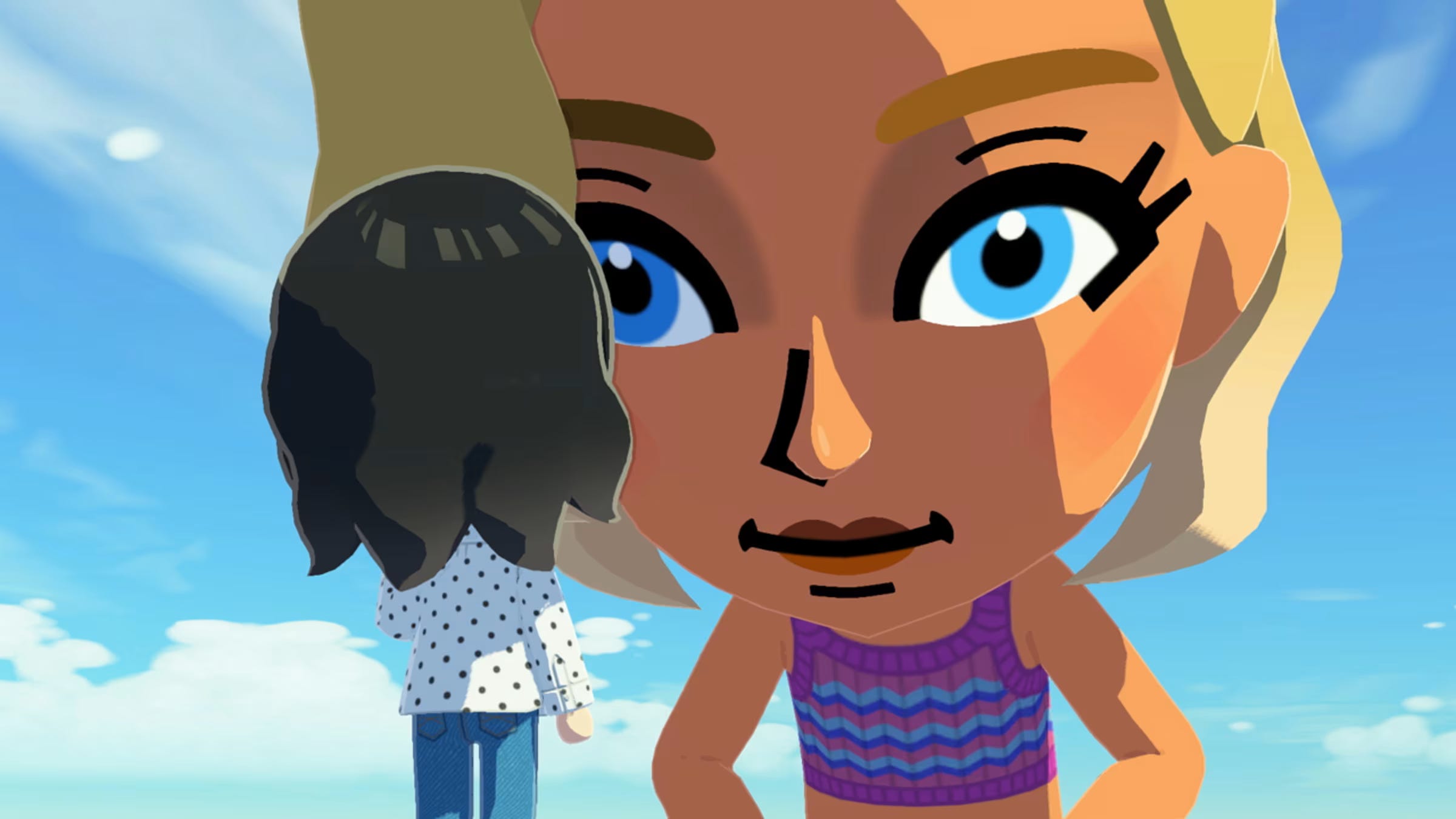
Patrick: One of the games people brought up was Tomadachi Life. I know you’re also obsessed with Tomadachi Life. Why do you think Tomadachi Life hits so hard? It’s not the kind of game you’d make by doing market research. It’s incredibly weird.
Park: It’s definitely not a style of game where its mechanics would do well in focus tests and whatnot. But Yoshio Sakamoto started the series in an effort to appeal more toward women, particularly adult women. He keyed in on their desire for something that felt social, inspired by the popularity and work done with Tottoko Hamutaro: Tomodachi Daisakusen Dechu. Something that you can include real life friends into and reflect their personalities back to the player.
Tomodachi Life is obviously an evolution of that, and I see that discovery within young content creators on YouTube and TikTok. They love inputting in their own friends and seeing the “drama” play out. The writing in the game (Nintendo’s localization team is peerless especially when it comes to quick wit and comedy) hits people’s emotions enough that they want to share that experience with friends. It’s a pretty remarkable feat that although the game has zero online features and no capability of in-console screen recording or snapshotting, it’s dominating social networks because that compulsion to share is that strong.
I myself am calling my own friends to tell them of their stories in my game. I put my dear friend and content creator Suzi Hunter in there, and every once in a while I’d text her or call her up to tell her what she’s doing. She doesn’t play the game, but she thinks it’s hilarious that I talk about the game like it’s a real-life gossip network.
“It really seemed like the kids there aren’t that much different from what we know broadly about how young people play games. Raised through covid, there’s a lot of emphasis on capitalizing on spending their time socializing while gaming. We didn’t talk extensively, but of course they loved Roblox, Fortnite, VRchat and any game that lets you just hang out and chat with your friends.”
Patrick: My kids are 6 and 9. The commonality with those high school kids and Tomadachi Life is an emphasis on social. When I talk about what makes Roblox work, I tell people it’s the emphasis on “social-first design,” where the mechanics are in service of a good hang, not a good game. Or, at least, our usual definition of gameplay. Does that read right to you, too?
Park: Tomodachi Life itself is such a chill game with basically no real “mechanics,” that it makes it easy to talk to your friends on Discord and fritter the time away while accomplishing your daily tasks. I see that a lot in MMO spaces among creators and Vtubers especially, all young in their early 20s, not even doing their dailies or roulettes (FF14), just sorta hanging around and yapping. Despite how wonderful the Final Fantasy 7 Remake trilogy is, those games feel very much like games targeted toward me and my peers (I’m 44) whose memories of gaming include this explosive evolution of narrative design across various genres.
For the younger generation, this style of gaming was already full formed and fairly stagnant in evolution, so I don’t blame them for not feeling any excitement toward single player narrative games when these games have barely evolved. Hell, look at the backlash toward the most recent State of Play. This fusion of narrative and predictable gameplay (combat, walking, cutscenes, exploration, sidequests) might as well be marimba notes, all background noise that’s institutional and predictable.
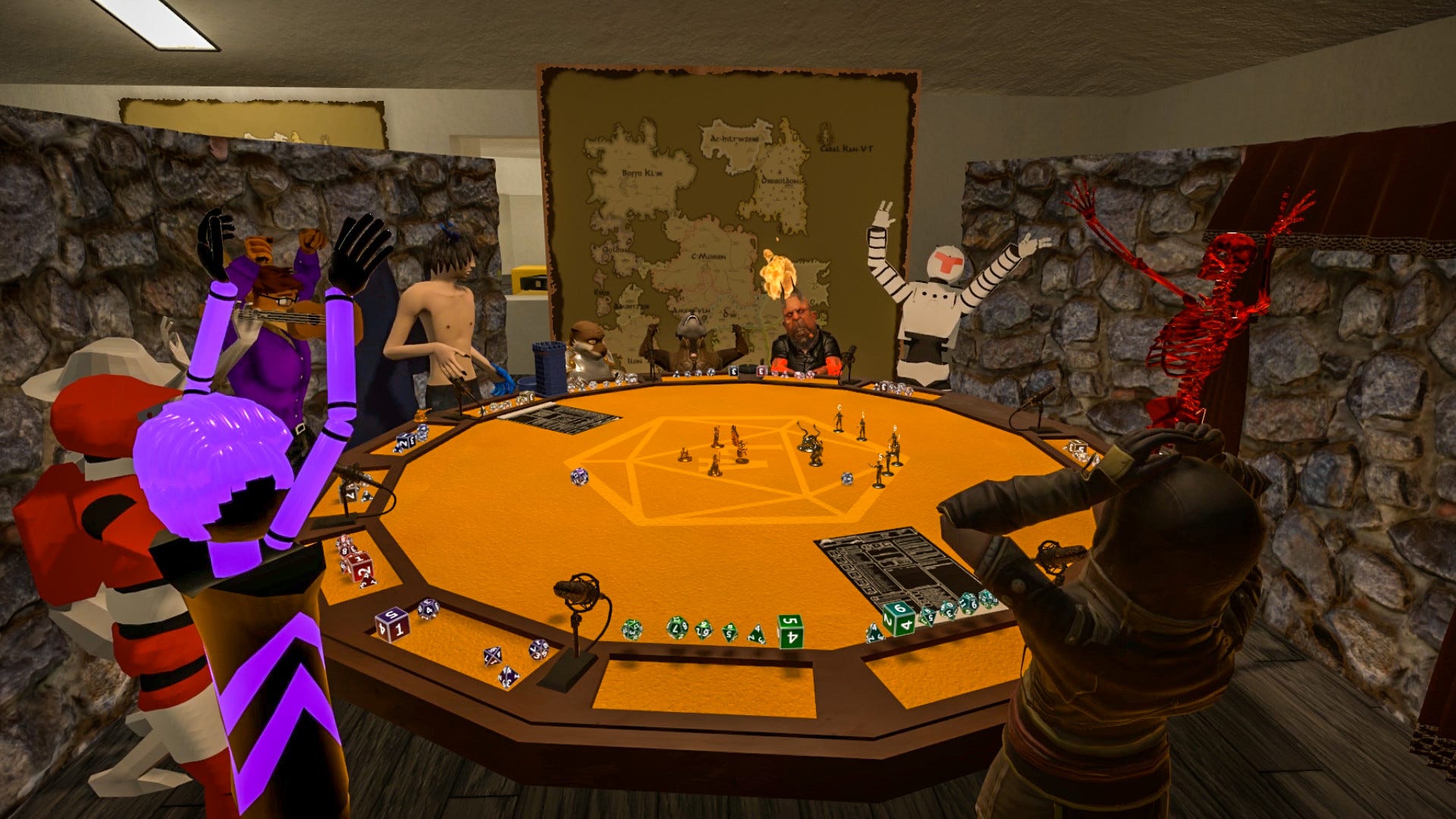
Patrick: What those kids are into will, eventually, define the games that are made, too. What do you think that future looks like?
Park: All this helps explain why I remain bullish on the idea of a metaverse. Mark Zuckerberg and Meta stole the narrative of defining the metaverse with its business name change and billions of dollars of investment, all in the service of forcing their bought-for VR platforms as enterprise services.
But the metaverse isn’t just VR chat, Zoom calls with 3D avatars and it isn’t just Second Life, its own walled garden of community. The nucleus of the metaversal idea is in these games that encourage hangouts, like Fortnite and Roblox, but eventually would evolve into a world that can speak across platforms and coding. I am the first mainstream media journalist to cover the metaverse (in games I’d give credit to Dean Takahashi, who covered it before me), but this was before Zuckerberg ran with his own narrative. As I understood it, this fully explorable 3D virtual space (which doesn’t require headsets) built on universal language was probably not going to happen in our lifetimes, but I do think that the future of the social internet and gaming are intertwined.
It’s the reason why Tim Sweeney has been pushing Unreal Engine not just across the games industry, but various other industries as well, including film, automobile, boating, military training and architectural planning. His ideal vision for him, as I understand it, is for Unreal Engine to become the construction materials contractor for building this hypothetical 3D future. It’s easy to dismiss the metaverse as another buzzword like NFTs or crypto, which it certainly became. But the larger philosophy of it is still possible, especially if you see how young people continue to interact online.
Also:
The VR phase for my nine-year-old seems to have passed. Maybe it’s time for me to reclaim my Meta Quest and see what’s happening inside of VRChat sometime.
Young people being drawn to social games does mean they’ll stop telling stories. But I do think games aren’t telling the kinds of stories they want to hear.
It’s also easy to overanalyze this. Things work in cycles. It’s hard to pin down what really is changing. What are you noticing amongst your own kids?
I have a friend who’s a high school English teacher. His students know he plays games so they talk about them with him a lot. Tomodachi Life definitely comes up a lot, they kept asking him if he was playing it, as does Fortnite. Interestingly, at least once a year he has a student playing Persona 5 Royal. One kid even dressed up as Akechi for Halloween! I know the high school setting doesn’t work for everyone, but as fans of the series (and Royal in particular) it’s nice to see teens enjoying it. It will be interesting to see if it switches to Persona 6 when that eventually comes out.
loved this!