

When Mom Hits Live: How One Streamer and His Mother Found Common Ground Online
Most parents have trouble connecting with their kids. Even fewer parents follow in their child's footsteps.

Explaining streaming to someone who doesn’t care about games is like explaining television to someone who doesn’t really “get” electricity. You can talk about Twitch subscriptions, ad revenue, cross-platform promotion—whatever—but their eyes usually glaze over somewhere between “Twitch” and “don’t worry, it’s legal.”
So when you tell your parents you’re streaming full-time, “I’m proud of you” is not the default response. Confusion is more common. Sometimes, it’s ambivalence. Sometimes, it’s outright hostility. Browse YouTube or Reddit long enough and you’ll find hours of compilations where a parent walks into frame and detonates the vibes—yanking power cords, mocking what their kid is doing, or just revealing a painful lack of understanding.
Which is why I can’t stop thinking about Tanner “SmallAnt” Ant and his mom.
If you don’t know him, SmallAnt is one of those enormous creators you might casually stumble across while looking up a Mario Odyssey trick, and then realize, 17 videos later, you’ve watched him min-max pencil sharpening or invent a new way to suffer in Pokémon. He’s a speedrunner turned variety guy who makes clever, tightly edited challenge videos that regularly pull millions of views and thousands of live viewers. He understands how to talk to the algorithm, but you feel like he’s talking to you.
And sometimes, he’s talking to his mom. On stream.
Because alongside his massive audience is another channel: SmallAntMom. Her numbers are modest compared to her son’s, but “modest” here means she’s usually in the top 1% of Twitch. She plays a similar rotation of games—Mario, Zelda, cozy platformers—and her streams have the kind of gentle, slightly chaotic warmth you get when someone is clearly still learning but also genuinely happy to be there.
In the beginning of one of the first videos I saw with them together, she’s trying to master some basic controls:
It’s the kind of moment that makes chat spam hearts and “MOM BASED” at the same time. It’s also the kind of moment that, if you’re someone’s kid, makes you want to call your own parents and play with them.
“I Never Got Her into Streaming.”
When I first found her channel, I just assumed the story was simple: successful streamer encourages his mom to try it, community shows up, everybody wins. But when I asked SmallAnt how it actually happened, he immediately corrected me.
“I never got her into streaming. That was not my idea… it was honestly kind of unexpected,” he told me. “Growing up, she didn’t really play any video games at all. She wasn’t really interested. If she was ever offered, she was like, ‘Yeah, no, I don’t feel like it.’ So, it was very strange. Where she’s at now, I never would have expected it.”
The only reason she even had a Twitch account was the old Twitch Prime setup. “I went home one weekend and said, ‘Hey Mom, do you have Amazon Prime?’” he said. “She’s like, ‘Yes. What do you want to order?’ I’m like, ‘Oh, nothing. If you connect it to a Twitch account, I can just get free money.’”
He walked her through making the account—“SmallAntMom,” naturally—so she could use her monthly Prime sub on him. Once a month, she clicked a button, her son got a few dollars, and that was that.
A few months later, Tanner came back with a bigger bombshell: he thought streaming could be his job. “They’re like, ‘What do you mean? We don’t even know anything about this, and you’re telling me it can be a job?’” he said. “I explained it and showed them some stuff… they kind of just trusted me with that.”
Part of why they trusted him is that they understood something fundamental about what he was doing: to them, their son wasn’t just playing video games.
“Once I started talking about more of the backend stuff, they started seeing it more as a business—like I’m a small business owner,” he said. “The idea sounded cool, because they run a business themselves, so it was a positive. I think they were cautiously optimistic.”
Cautiously optimistic is pretty far from “absolutely not over my dead body,” which is the baseline many kids hear when they float full-time streaming, even with an established audience.
And then his mom decided to go live herself.
“People Were Absolutely Amazing to Me.”
When I spoke with SmallAntMom, she gave a version of the same story—confused but supportive parents watching their son do something weird that seemed to be working—and then filled in the missing piece: why this woman who didn’t grow up with games decided to start streaming.
It started small: watching her son’s channel, making a Twitter account under the same name, saying hi in chat every now and then.
“I followed on his stream, and people were absolutely amazing to me,” she said. “Which I thought, ‘Well, if I have a good response with people on Twitch just chatting with me and good response with people on Twitter engaging with what I’ve said, then maybe I could stream on Twitch and have some fun doing it.’”
There was one problem: she lives somewhere with terrible internet. However, she made the leap anyway, and paid for a second, better connection just so she could stream reliably.
“My journey on Twitch honestly has been incredible,” she said. “I didn’t even know about Twitch before Tanner told me about it… but I really enjoyed the community aspect of it. You get to see these names and these people that are always there and you interact with them—it’s just a wonderful experience.”
If you’ve spent any time around kids and games, you’ve probably seen the opposite version of this story. Parent hears “Twitch,” Googles “Streamer,” finds the latest Kick controversy, and decides the safest course of action is a total shutdown.
What happened here is the version we don’t see enough: a parent sees their kid building something online, notices the community seems kind, and chooses curiosity over fear. As the creator economy remains the number one pursuit of children, it will be something many parents confront going forward.
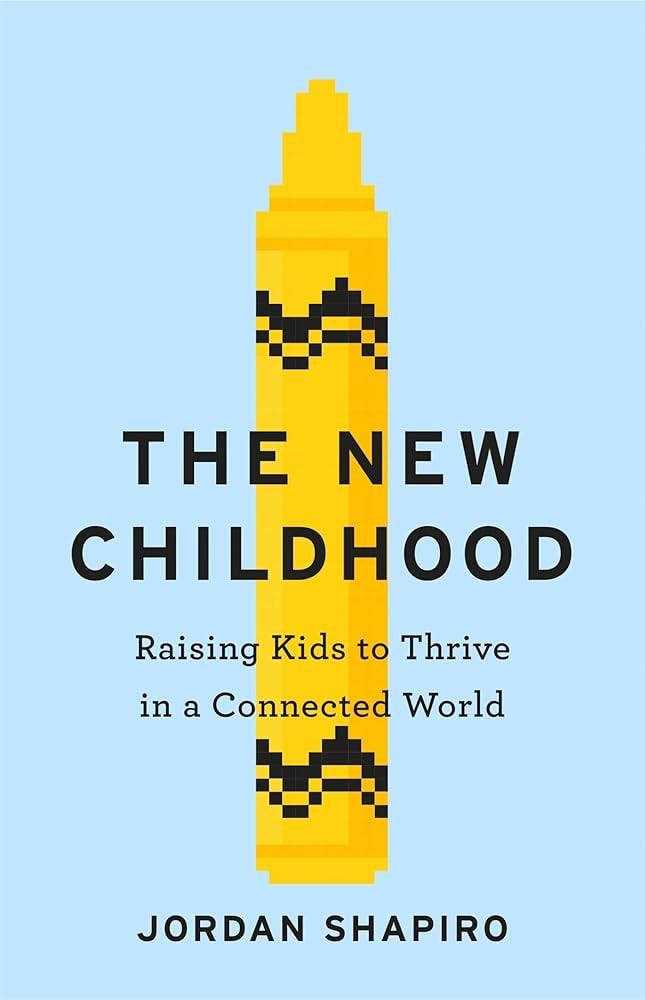
People like Jordan Shapiro (The New Childhood), Sinem Siyahhan (Families at Play), and researchers at Arizona State University’s Center for Games & Impact have been arguing for years that the healthiest way for families to deal with games isn’t to slam the brakes, it’s to sit down and pick up a controller.
When parents play with their kids, “you’re always on that thing” can turn into “tell me about what you’re doing on that thing,” giving kids the rare joy of teaching their parents and giving parents a window into what is, for many kids, their actual social life. Most of that work focuses on younger children, which is part of why Tanner and his mom are so fascinating: the “screen time” wars should be long over—he’s an adult with a career—yet her late-in-life decision to go live still managed to change their relationship.
When I asked Tanner how their dynamic had shifted, he didn’t hesitate.
“I played a good amount of board games with my parents in high school,” he said. “But I think I distanced myself a lot. I was very much like, ‘I don’t want to spend time with you anymore. I’m my own person.’ I think that happens to a lot of people.”
After high school, the gap just… stayed. He was deep into games; they weren’t.
“The biggest thing I was into was video games, and none of my parents were really into video games,” he said. “So there’s nothing to talk about. Now that my mom is streaming and we have a shared interest, we can kind of relate on stuff. We can talk about it and, you know, work together on things. I think it’s really good now.”
His mom echoed the same thing, in her own way.
“It has helped our relationship because we’ve got things in common, and I kind of understand what he’s doing,” she told me. “I’d say it definitely has increased the conversations and our overall relationship. We talk a lot more now than what we used to. Whether it’s text or now it’s Discord calls—it’s kind of a cool transition. I like it.”
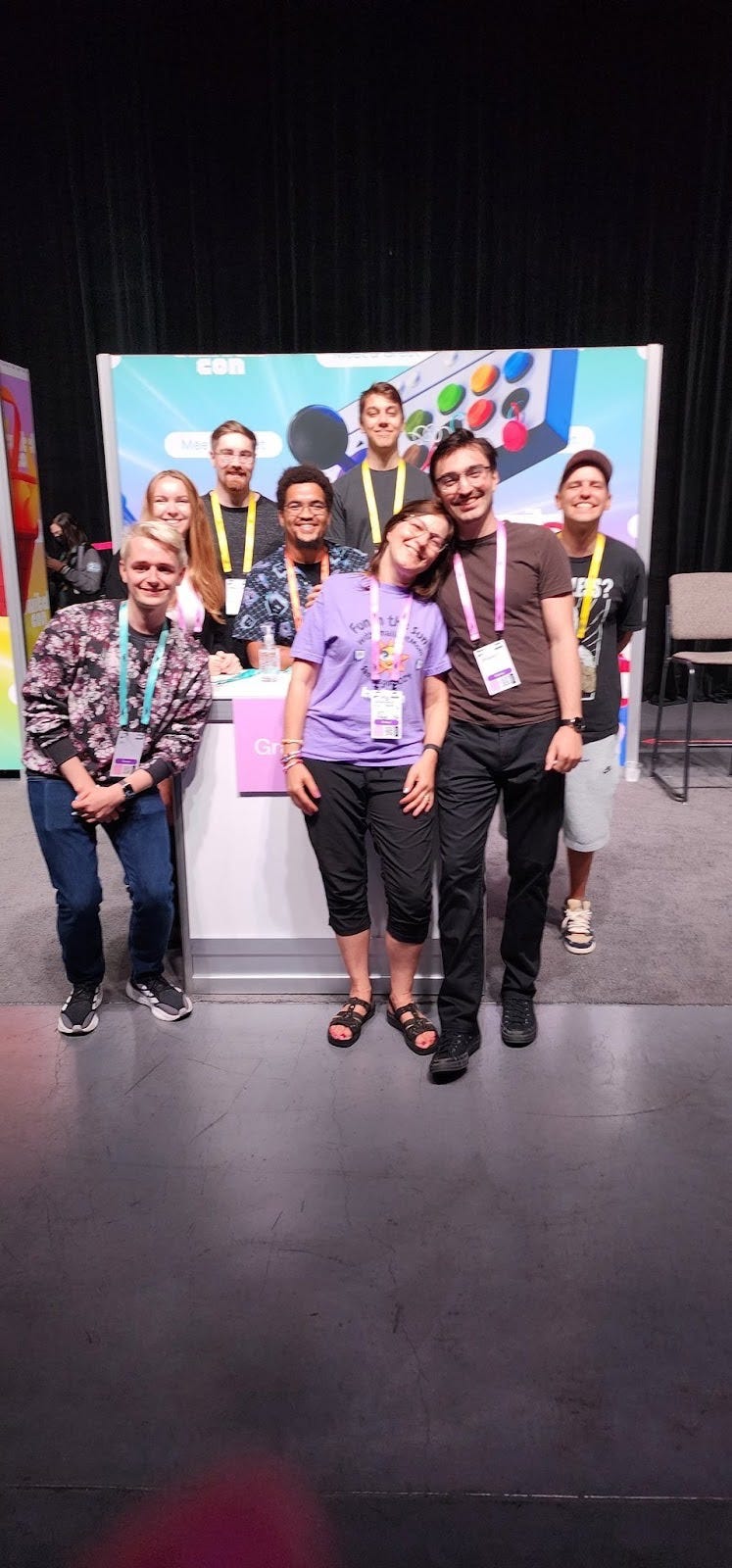
SmallAnt and SmallAntMom at TwitchCon 2024 (Source: SmallAntMom’s X account)
It’s not a dramatic “games saved our family” arc. By all accounts, they were already close. But the fact that both of them, interviewed separately, independently brought up how much more they talk now feels important. The research says playing together helps. Here’s what that looks like when your “kid” is a full-grown adult with a business, and your shared game is Twitch.
Supportive, Not Clueless
Tanner didn’t just boot up OBS and quit his day job. He did well in school. He had a career before going full-time, and he approached content creation like a job, not a lottery ticket. His parents didn’t co-sign every decision blindly; they looked at the numbers, asked questions, and made sure their son understood what he was getting into.
Streaming is not a magic solution to anything. If your kid is flunking out of school and rage-streaming 12 hours a day for ten viewers, “live your dream” is not the best advice. But there’s a big difference between “this industry is hard, let’s talk about a backup plan” and “I refuse to learn anything about what you love, so my default answer is no.”
What struck me most was how simple the turning point was. It wasn’t a galaxy-brain media literacy seminar. It was a mom watching chat, noticing people were kind to her, and thinking: maybe I could try this, too. From there, it’s getting better internet, struggling through Minecraft, asking her son questions about bitrate and emotes and subscriber perks. It’s replying to tweets. It’s showing up.
And it’s ending up with this piece of advice for other parents harboring a budding creator in the house: “Let them live their dream,” she said. “You don’t know if they’re going to succeed if they don’t try. I’m a firm believer in: absolutely, try it. Don’t just think about something, go ahead and do it… You might embrace that and enjoy it. Or it might not be what you thought it would be. But honestly, live your dream. If you want to do something, whatever it may be, I firmly believe you should, because otherwise you’re gonna always wonder.”
 | A guest post by
|