

Facing Loss in Kirby's Forgotten Land
I never got a parenting handbook, but if I had, I am sure “Consoling Your Crying Child During End Credits of a Video Game” would not have been a featured section.

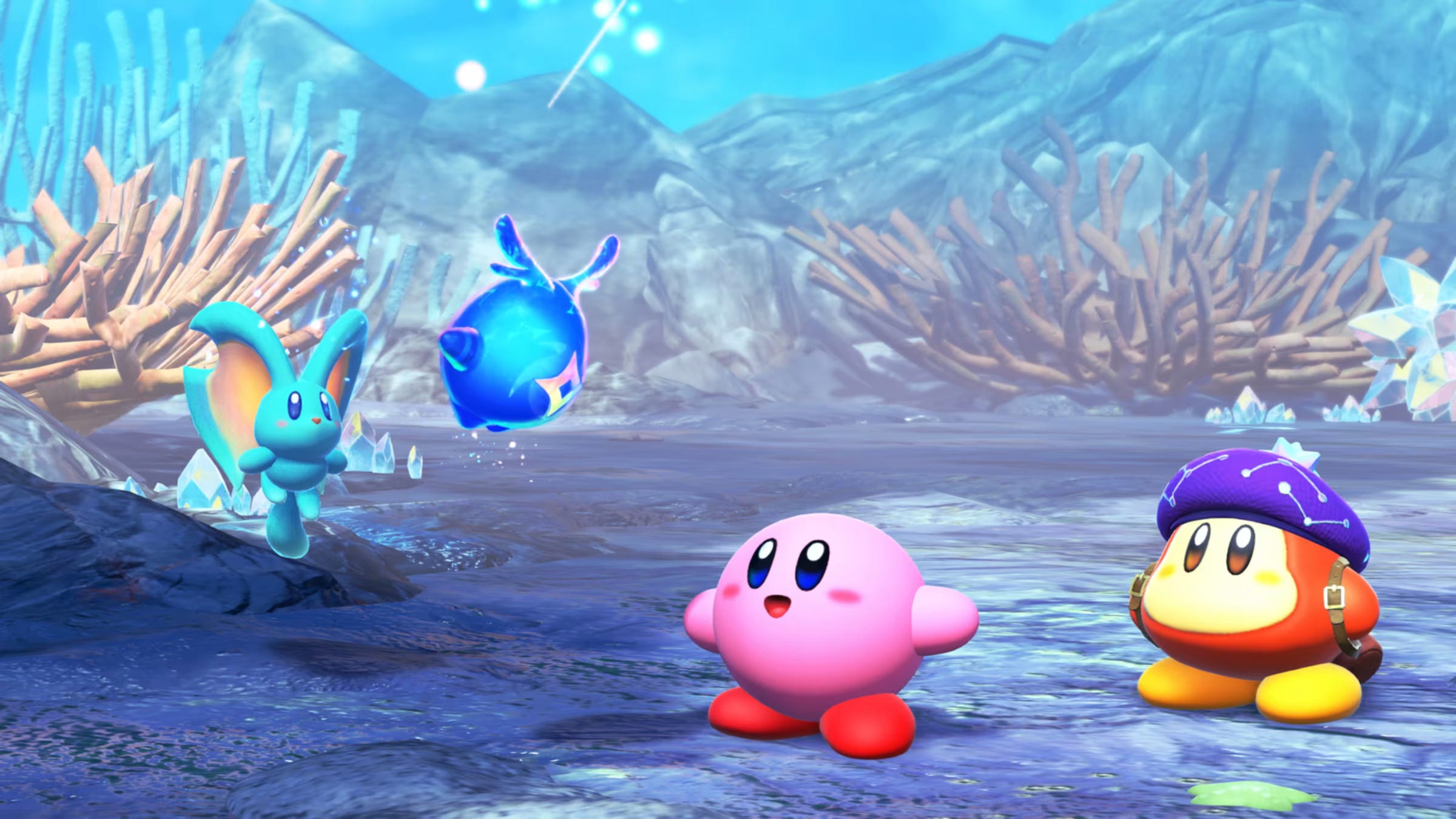
This past year, my husband and I gave our four-year-old Kirby and the Forgotten Land for Christmas. She had gotten really good at Mario Kart and Princess Peach Showtime, so we thought this was a larger adventure that would be fairly low-stakes for her emotionally.
I was sorely mistaken.
We started off with my husband playing with her as “Player 2,” but soon, she was playing on her own, only needing our help to defeat the bosses. When we weren’t around to help her with the boss fight, she would replay the same levels over and over, or watch the cutscenes in the movie theater in Waddle Dee Town on repeat, or eat meals on top of the restaurant with her friend Elfilin, or giggle at them sleeping all together in Kirby’s bed. She loved the game.
Over a few months, she progressed to the end of the fourth area, and with her Daddy’s help, defeated the boss. This is when something unexpected happened: my daughter had to watch her friend Elfilin get kidnapped by the boss she had just defeated.
She was devastated. We were all convinced she would get her back in the next area. But when she didn’t find Elfilin, I saw her visibly lose interest in the game.
Elflilin was the first friendly face she met in this strange world. Not only cute and bright, but in need of saving. The game taught my daughter that Elfilin depended on her, that she was the one who could keep her and the Waddle Dees safe. She was rewarded for doing this through Elfilin’s friendship: cheering and dancing when she succeeded, sharing meals on top of the restaurant, cuddling up in bed to end her day.
When Elfilin was taken, it must have also felt like she failed her friend.
She didn’t want to keep playing; she wanted to start over.
We started “Save File 2.” She flew through the levels with more confidence, even taking on most bosses herself. But again, as soon as she reached the level Elfilin was kidnapped, we had to start over.
I realized that she was afraid to be disappointed again. What if she never got her friend back? It was easier to go back to the beginning than to face that loss.
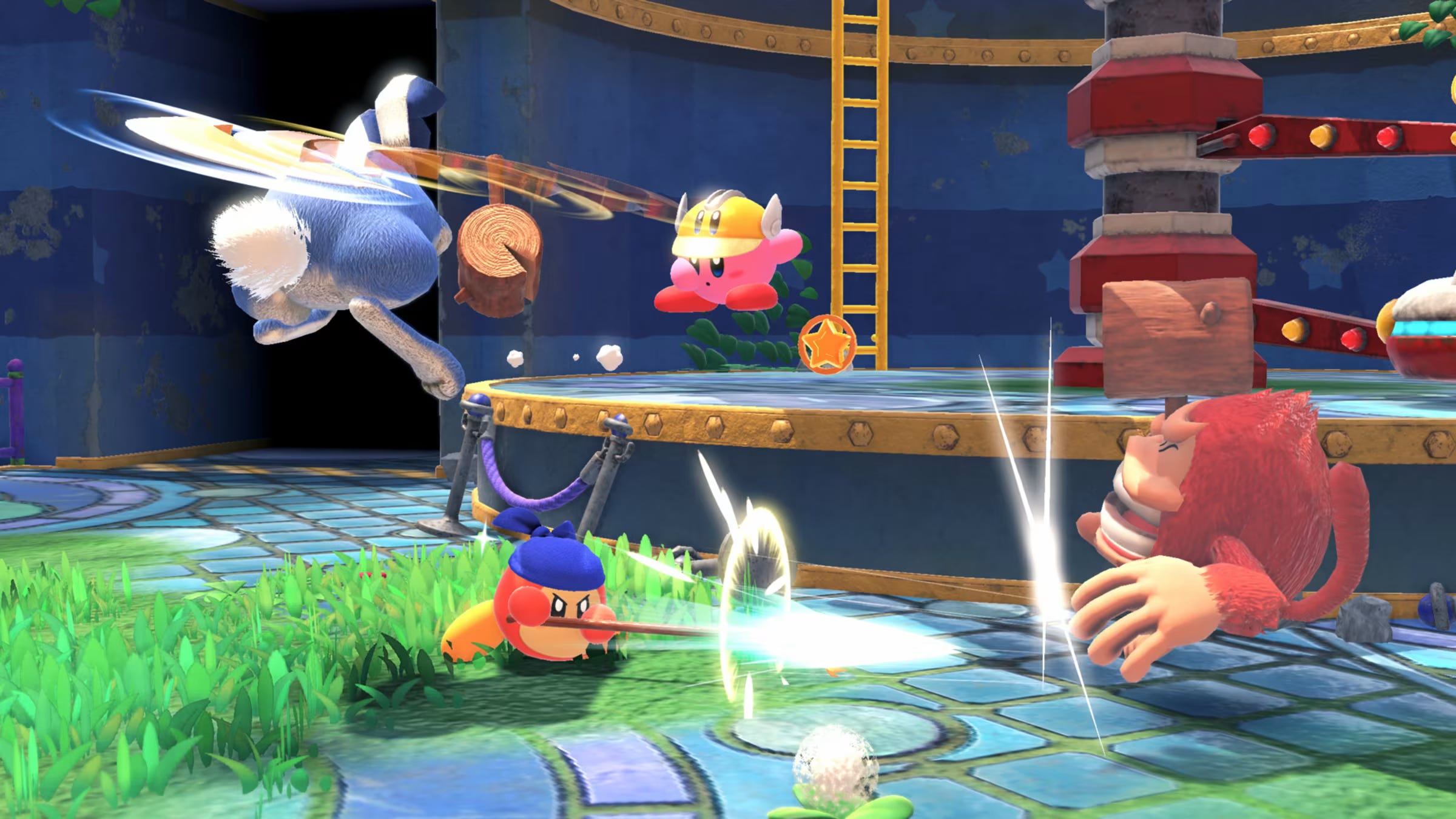
But isn’t life all about facing loss and finding ways to overcome it? If I couldn’t help her navigate this loss and disappointment, then what about real life?
I decided I needed to see how the story ended to prepare myself for that eventuality, so I played through the game on my own. While the final sequence was a long-multistage fight, I was most concerned about the fact that as soon as you rescue Elfilin, she is taken away from you again. Almost immediately. Then after an epic, anime-style battle, you rescue her again only to see her say goodbye to Kirby with one last tearful: “Thanks for everything.”
Cue end credits.
As if the loss of Elfilin wasn’t bad enough, end credits as a concept themselves were traumatic. During this time of multiple Kirby replays, my daughter had also started to play A Short Hike. She loved the open world and the do anything, climb anywhere nature of it. One morning she thought she’d put Claire to bed and accidentally cued credits. I came out of the bathroom to find her sobbing on the couch, TV off. She thought the end credits meant she couldn’t play the game ever again.
Woof. This was going to be something.
I waited a few weeks, but eventually I told her that I had finished the game and that she was really close to rescuing Elfilin. She wanted to know every detail of what was coming next. I personally hate spoilers, but I realized that for my daughter, not knowing what would happen and if Elfilin will ever be rescued was the biggest challenge. I told her the bosses she would face to get Elfilin back. She asked what happened next and I said simply: “And then you have a big boss fight.”
“But isn’t life all about facing loss and finding ways to overcome it? If I couldn’t help her navigate this loss and disappointment, then what about real life? I decided I needed to see how the story ended to prepare myself for that eventuality, so I played through the game on my own.”
I decided to not tell her about the second Elfilin kidnapping or that this fight was the end of the game. In retrospect, I think this was more for me than for her. I wanted her to finish the game. I thought if she knew, it would deter her from playing it through.
I told her I would play through it with her if she was ready. She did the first boss fight herself and then frantically asked “Where are we going? What’s happening now?” She fought the next boss and saved Elfilin and cheered, jumping up and down, yelling for Daddy to come see.
And then the ultimate life force began absorbing everything. She froze. I said, “Run, honey!” Without looking from the TV, she handed the controller to me.
When Elfilin was taken again I don’t think she had time to process what it meant. We just needed to go fight this thing. She cheered me on as I just barely defeated the boss with a sliver of health left. We sucked Elfilin back out of the creature and worked together to defeat them in the most badass, anime semi-truck-flying-through-the-sky sequence.
I set the controller down and wrapped my arm around her as I read the dialogue of the final cutscene for her.
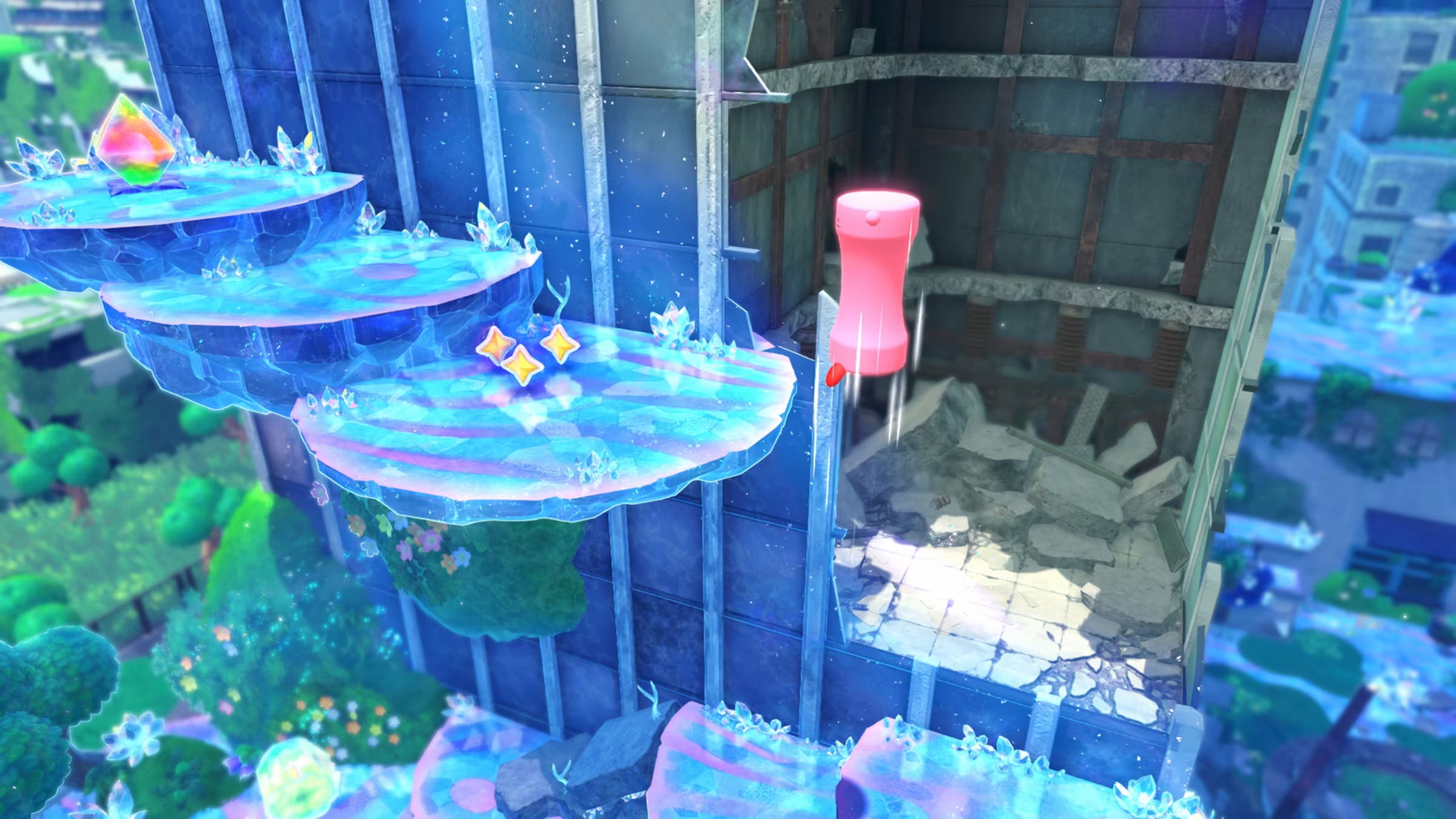
As the credits ran and she wept in my arms, I found myself trying to draw her attention to the pictures depicting Elfilin opening a portal and bringing Kirby back to the Forgotten Land and how everyone was friends now and how it was all okay. I didn’t allow her to sit with her grief; I just tried to make it better. Maybe I should have paused and let her express how she was feeling. Or even just allowed her to watch in silence to come up with her own conclusions on what was happening.
When she faces loss in her life, it won’t come with “Save File 2,” or end game plus, or DLCs. I had wanted to use this experience and her deep investment in this game and the characters as a way to help her explore and process really big feelings. Yet, there I was trying desperately to move her through her hard emotions as quickly as possible.
A few months have passed since this day, and I still feel somewhat like a failure in trying to utilize video games as a way to explore real emotion and teach positive coping mechanisms. I have noticed, though, that when my daughter sits in the Waddle Dee town movie theater now to watch the cutscenes on loop, she watches the end scenes most often, whispering the dialogue to herself.
I realize she is still doing the work I tried to rush her past. She is grieving in her own small, steady way and revisiting the story until it feels less frightening. I thought I had failed her, but maybe what she needed was just the safety to come back to the grief on her own terms.
Her world is a lot like Kirby’s: full of bright colors, hidden dangers, joys, and unexpected loss. As much as I want to, I can’t prepare her for every ending or credit roll. But I can sit beside her, controller in hand, ready to face whatever comes together.
 | A guest post by
|
This was a lovely read, thank you for sharing!
My son and I played this together when it first came out. I think he was seven when we played “Star Allies” and we had been awaiting “Forgotten Land” since then. He must have been eight when we played it together and although we didn’t explore grief in the game like your child did. Instead he did it whenever Ash would die in one of the million Pokémon movies and Pikachu would do everything in his power to bring him back.