

My Dad Camped in Medal of Honor
A big part of my childhood, and time with my dad, was a dark little alcove in a destroyed building.

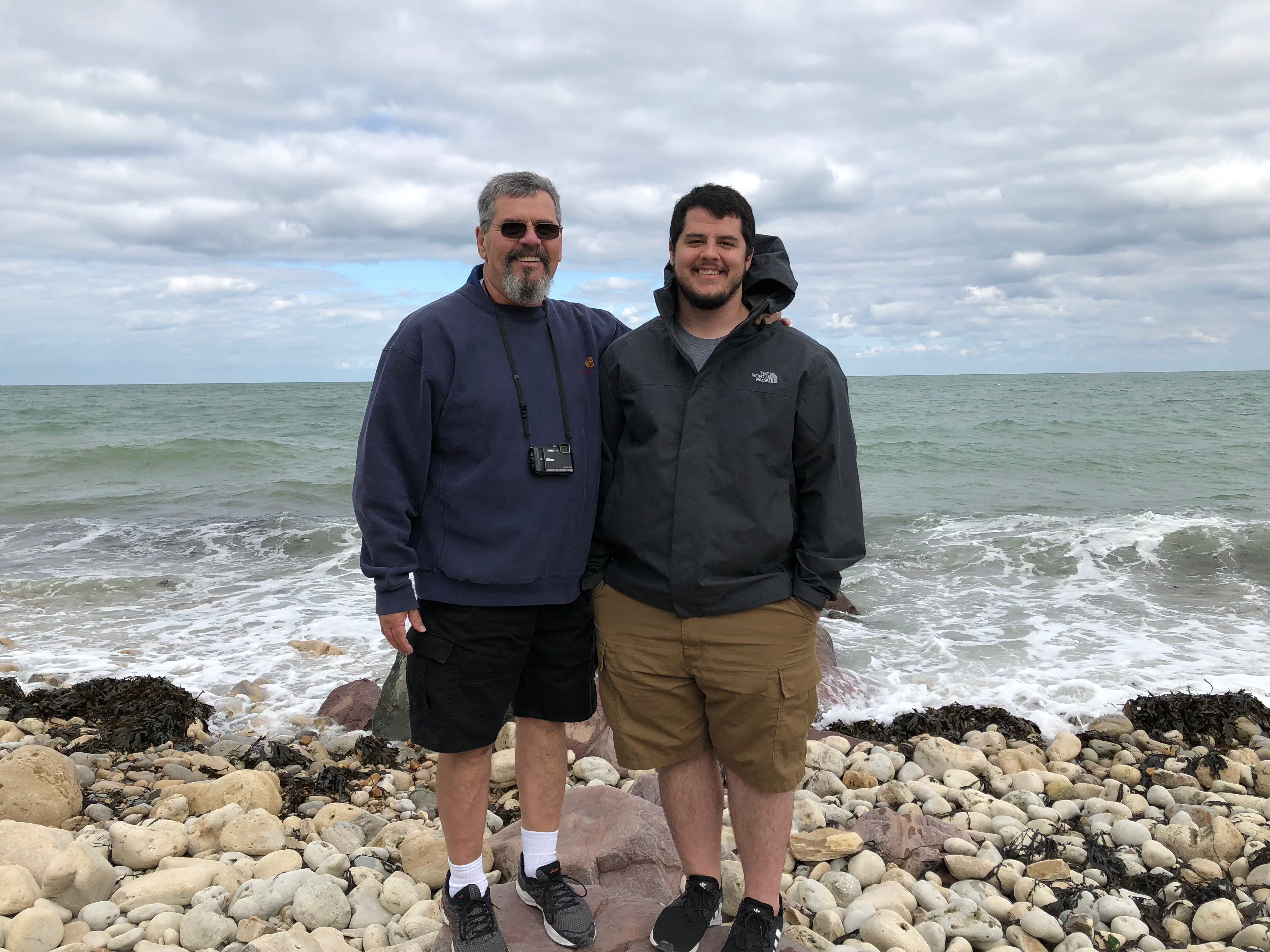
I’d like to tell you about my dad, Bob.
Five years ago, I lost him to cancer. I think about him every day. But funny enough, I also think about his camping spot in the 2002 video game Medal of Honor Allied Assault.
Bob was a living image of Boomer masculinity. Think: Red Forman, Tim Taylor, and being from New Jersey, even a little Tony Soprano—just, you know, not evil.
He served in the Marines. He drove an old, wobbly Ford pickup—manual, of course. For most of his life, he worked as a lineman hanging off power poles, or standing in a bucket surrounded by transformers and high-voltage cables. It was dangerous, but he was really good at it.
In his off time, he occasionally played video games. Mostly Medal of Honor Allied Assault’s multiplayer. And despite Bob embodying the idea of working-class manhood, he spent lots of time in Allied Assault using one of the most undignified strategies in gaming: camping.
Growing up, my first gaming PC wasn’t mine—but my dad’s, and to my little-kid sensibilities, that PC was mesmerizing. Standing near it was like standing at the gates of Disneyland. I can even recall the smell when it was first put together—a combination of rubber, plastic and stale air.
My earliest memories of gaming came from that PC. The thrill of flying away from an exploding lunar base in Descent. Call of Duty’s phenomenal multiplayer—where you definitely shouldn’t snipe in Carentan. The demo for Halo: Combat Evolved, which showcased perhaps the greatest single level of all-time. The Silent Cartographer. Return to Castle Wolfenstein scared me enough that I couldn’t sleep for a week and was banned from playing M-rated games. (It didn’t last).
Medal of Honor Allied Assault released in 2002, a transitory period for games, particularly between the shooters of the 90s and the mainstream popularization of Battlefield and Call of Duty that took place in the mid- and late-aughts.
Set during World War II, Medal of Honor Allied Assault’s relatively realistic gameplay is what I think attracted my dad the most. He had a fascination with history in general, not just military history. He loved learning how ancient people lived and what old cultures were like.
In the midst of renewed public interest in World War II thanks to Steven Spielberg’s Saving Private Ryan and, uh, Steven Spielberg’s Band of Brothers, Allied Assault was the perfect game for a middle-aged, working class veteran/history nerd delivered at the perfect time.
A big part of my memory of that time was this dark little alcove in a destroyed building:
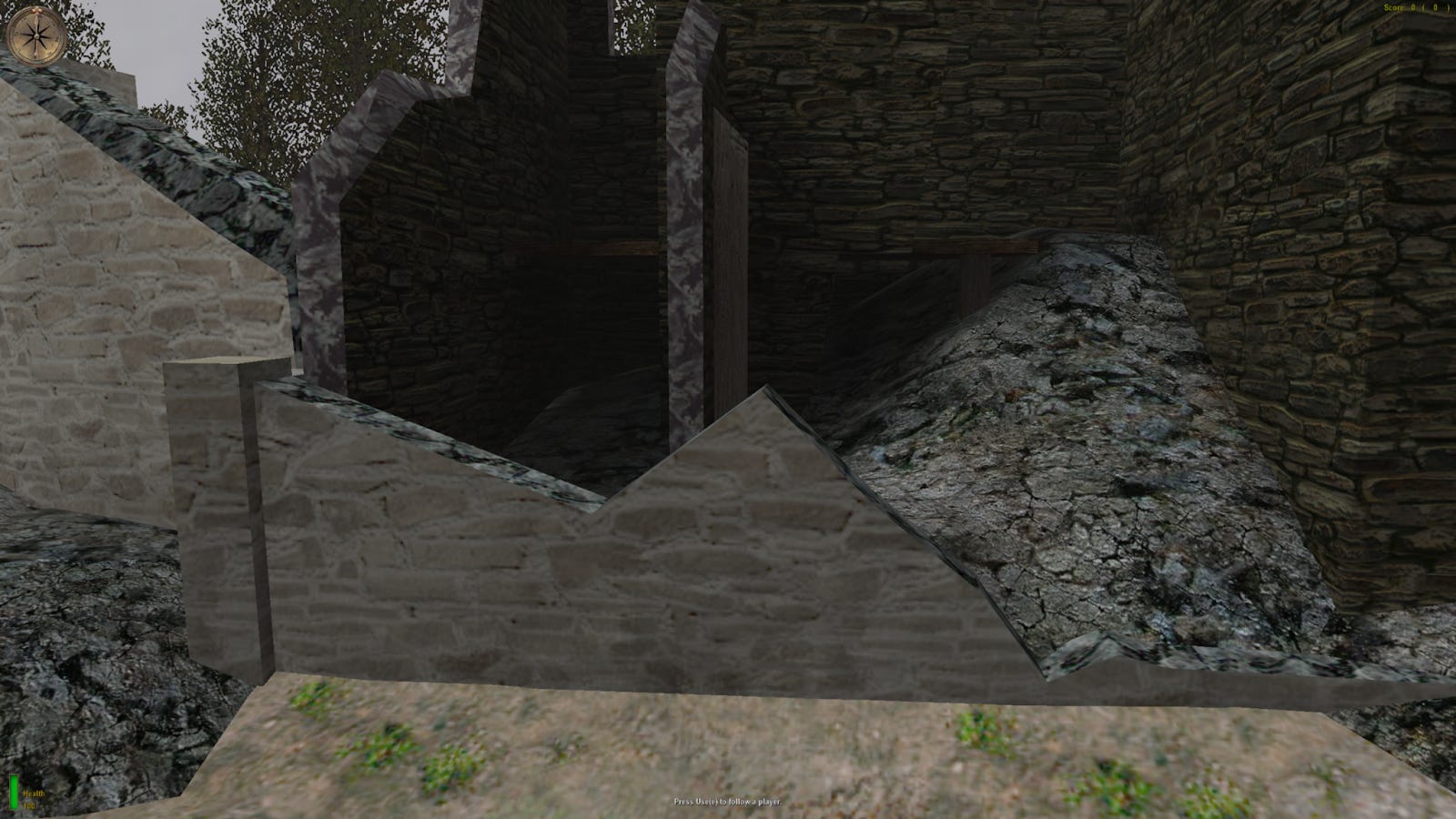
Allied Assault gives you a small, class-like list of weapons to choose from, with each side (Allies vs Axis) getting equivalent weapons. The Allies have the Thompson; the Axis have the MP40, etc.Both teams have a sniper rifle, and that was my dad’s choice—usually.
I don’t remember if he was any good or not, but I loved sitting next to him with my brother and watching him play. It was actually one of my favorite things to do. I distinctly remember one night (and even the map: Snowy Park) when my dad was getting decimated. Surprised at how badly his team was losing, I said, “They have to be cheating! Or maybe they’re all working together?” My dad laughed.“They’re just better than me.”
This was, perhaps, the one and only time in gamer history that sentence was spoken.
To improve his K/D ratio (or maybe because he just enjoyed it), my dad developed a strategy: camping with a sniper rifle! And that dark little alcove was his favorite spot.
It’s from the map Destroyed Village, which I remember being my favorite of Allied Assault’s multiplayer maps.
Destroyed Village is somewhat circular, with a street that cuts through the middle flanked by a line of buildings and a church. It has a good mix of short- and medium-range sightlines, with a few long-range sightlines if you can get the angle right.
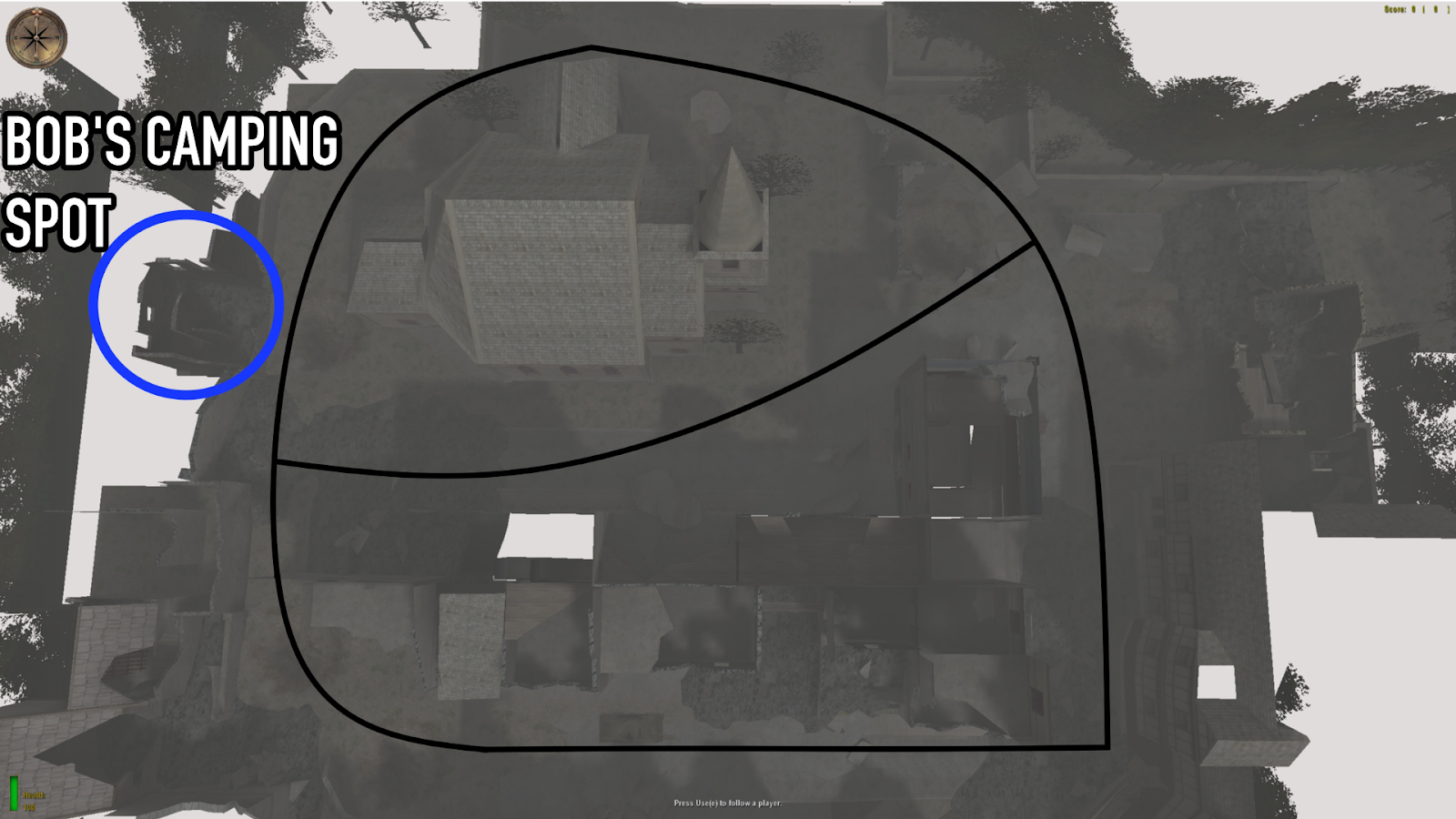
The alcove is across the way from the Church’s front door; a ruin obscured by shadow and a half-destroyed wall.The wall cuts the first floor in half and both sides give good views of the lanes beside the church. If you position yourself correctly, you can even sit behind the wall and lean between the sides.
From this vantage point, many players were sent respawning, unaware as they thoughtlessly turned a corner that they were about to be domed by an old man.
The right line is definitely more dangerous for enemy players. Those who walk down the street are farther away and have less cover.
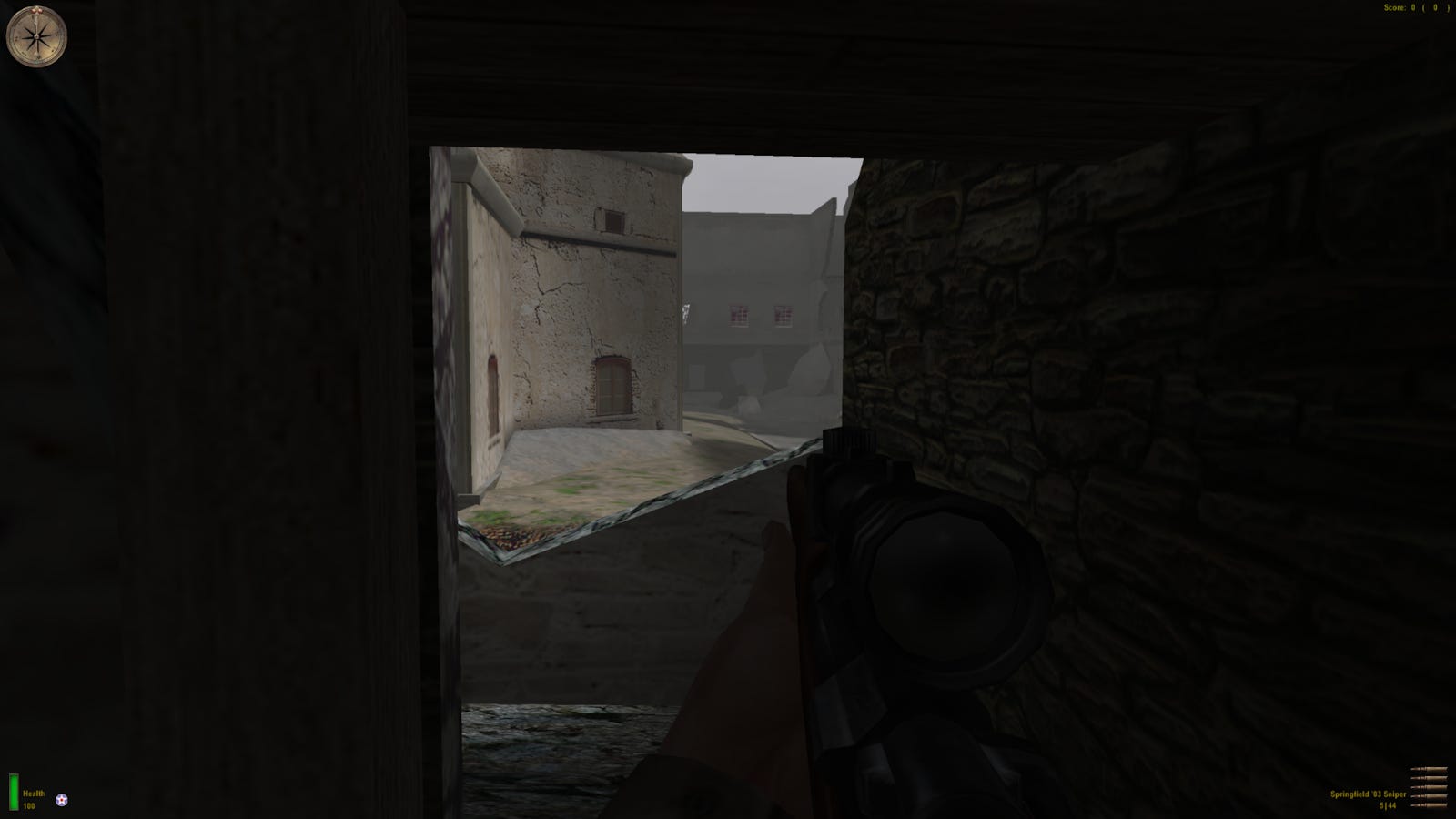
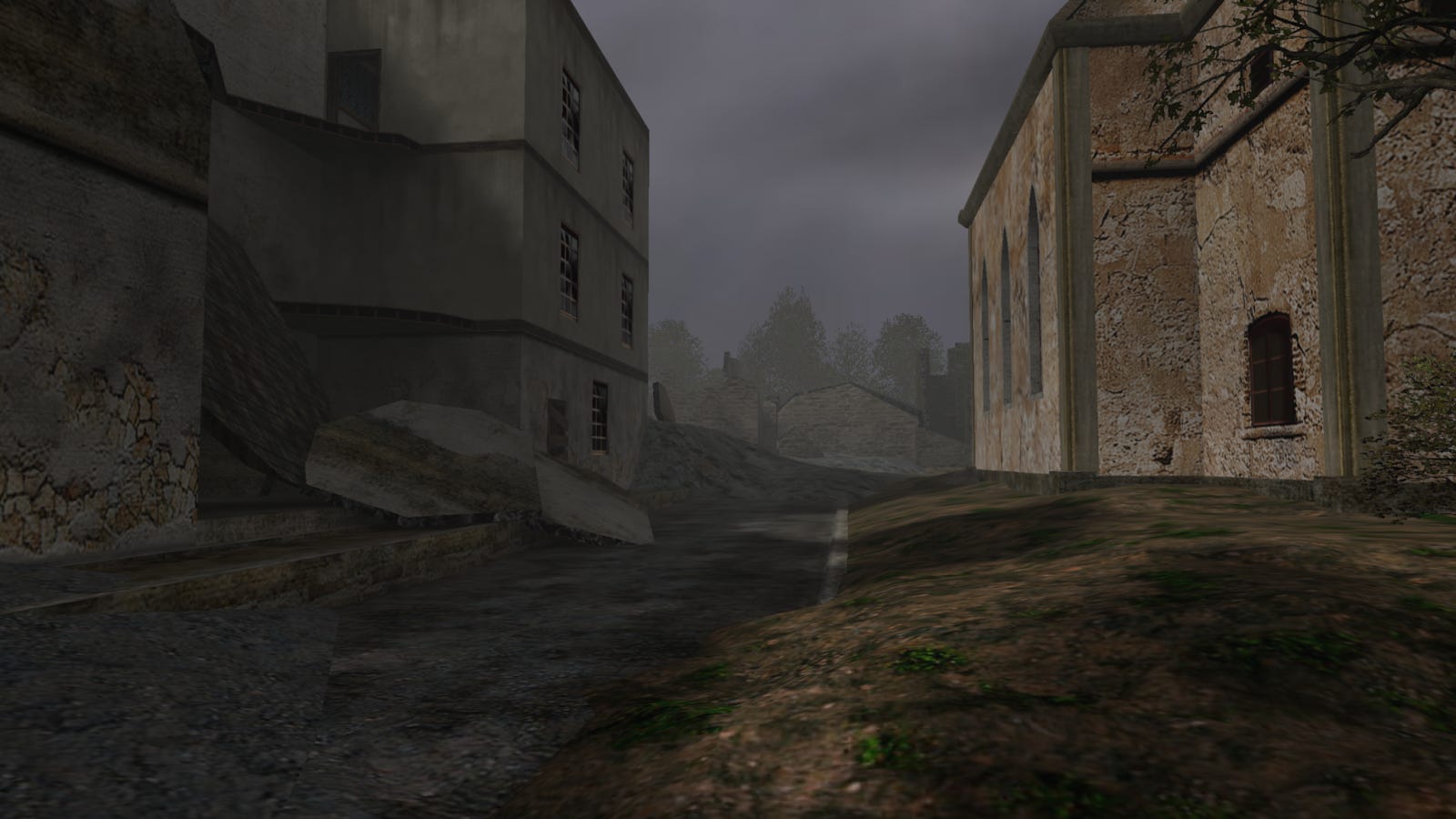
The left lane is still dangerous, but enemies are closer, so it’s easier for them to see you and react. From this side, you’ve got a shorter window to fire. If you miss or an enemy gets to a blindspot, be ready for a few grenades to bounce at your feet.
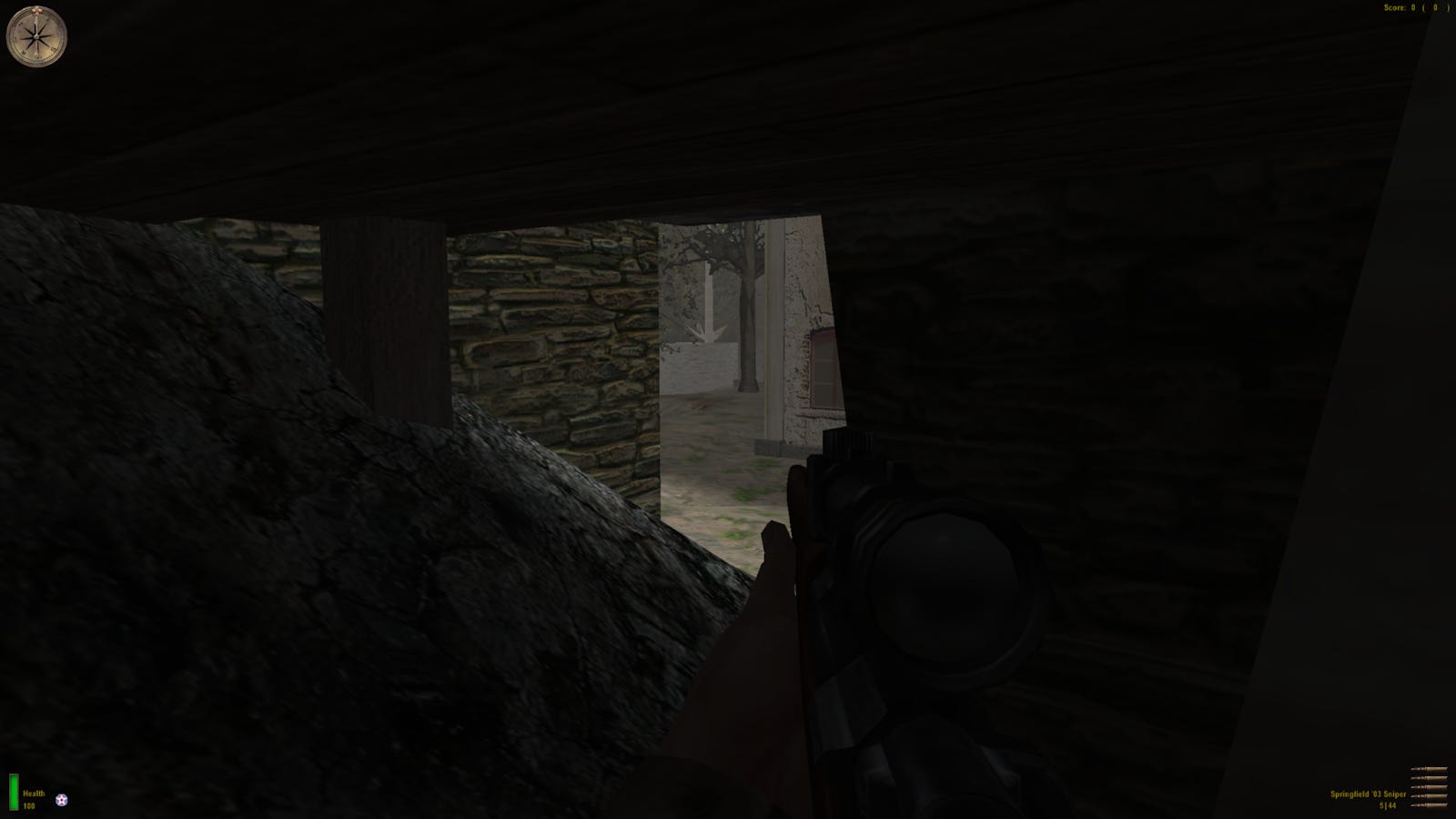
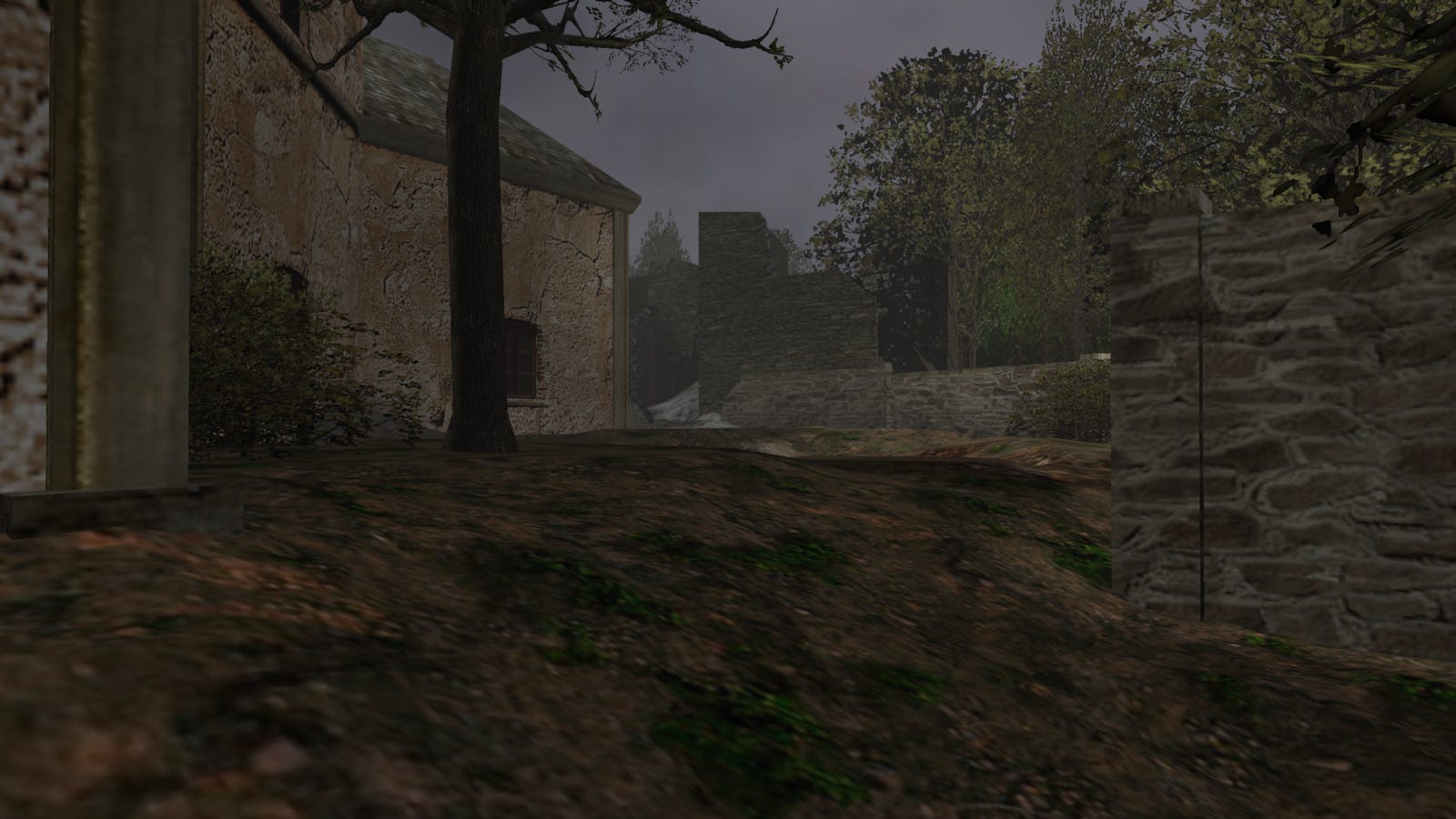
The worst case scenario is the church’s front door. Not only is it close, but it’s hard to catch enemies coming out of the door to begin with. If an enemy approaches from the church’s door and knows you’re hiding in this spot, you’ll find yourself at a cramped disadvantage.
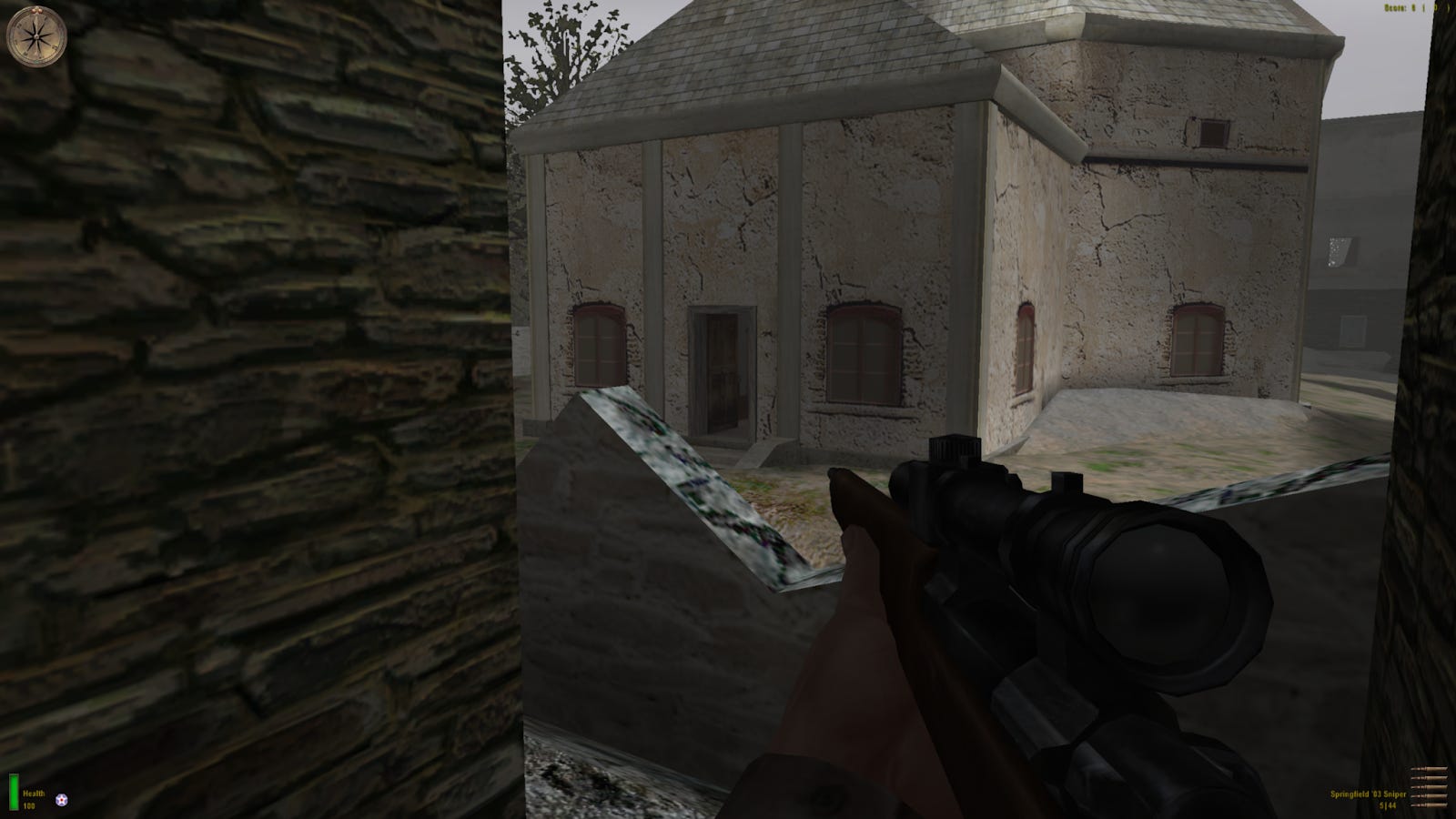
In the few times I’ve reinstalled Allied Assault over the last two decades, whether it be for another playthrough or just a quick nostalgia hit, I’ve returned to this spot, as though I’m completing a digital pilgrimage.
As there are no official servers for Allied Assault any more, my trips back here are solitary and quiet. I hide myself in the debris and think about all the fun I had watching my dad do the same.
Like I said at the top, he’s been gone for five years now.
The things you reminisce about after you lose someone are strange. For me, his old camping spot is one. It’s a spot we shared. As ephemeral as early 2000’s Allied Assault multiplayer matches were, this spot holds meaning to me. It means more than the actual rooms we were sitting in; even more than the houses!
I’m certain my dad probably didn’t play so much for his own enjoyment, but because it was a way to spend time with us. We’d sit next to him and cheer him on (or probably back-seat play) and those silly multiplayer matches are now some of my favorite childhood memories.
 | A guest post by
|
What a lovely article.
What a fantastic and heartwarming article, thank you for sharing.