

The (Sort of) Scientific Process of Getting Our Kid into Video Games
You could just give them Roblox! Or you could, step-by-step, walk them into video gaming independence.

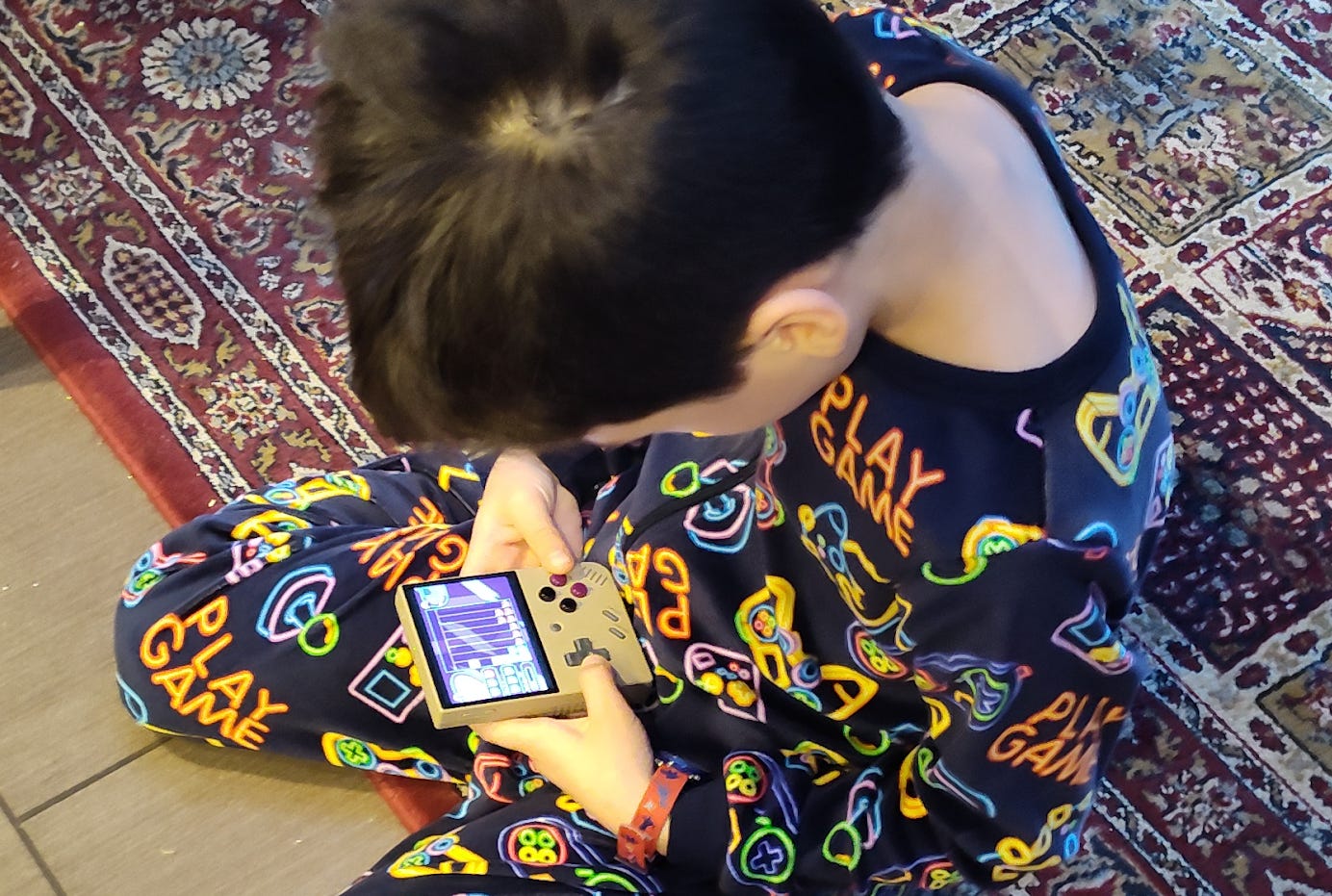
Conveyance is the ability of a game to express to players what the goals and mechanics are. There is an incorrect assumption that complexity or difficulty are limiting factors to conveyance when targeting children. While genres such Kazio Mario or Soulslike may be incredibly difficult, they are made deliberately “readable” to allow players to focus on their execution without confusion of design intent.
It’s always someone’s first time experiencing anything, especially when welcoming them into a new hobby such as video games.
[Editor’s Note: Crossplay does not promote or encourage piracy. Under no circumstances is this article an encouragement to seek out illegal copies of video games, old or new. No such links exist in this piece. Our position is you take advantage of the games you already own.]
Watching parents and children learn a new way to play while my team prototyped Starlink: Battle for Atlas at Ubisoft Toronto 1 we observed that new players would stop exploring the controller and gameplay once any path to success was found. Switching weapons to target elemental weakness was not immediately obvious to players because doing any damage, even ‘chip’ damage, was perceived as successful. Aligning player perception to design intent is a hurdle for many games 2.
With the decision to progress our six-year-old from family to independent play of video games this holiday season, selecting games with high conveyance 3 was the first priority.
Embarking into Videogames
“Come with me and you’ll be
In a world of pure imagination”
- Gene Wilder, “Pure Imagination” 1971
Despite the market for retro handhelds being primarily middle-aged men hoping to relive their childhood, there is growing interest in devices for children of all ages. Our reason for selecting this device was based on the following:
It’s a closed system, nothing gets in or out of the device without parental involvement.
No ads, microtransactions, online play, or title updates.
A form factor that fits well in small hands, and straightforward button layout.
Most importantly, a device that can be “theirs” and isn’t shared with mom or dad.
A price point that can be an ‘acceptable loss’ if need be.
When opening the gift it was immediately recognized as a real “Game Boy,” matching their plushie version. Their face lit up with the custom boot screen showing their name and made it clear it was a personal device special to them.
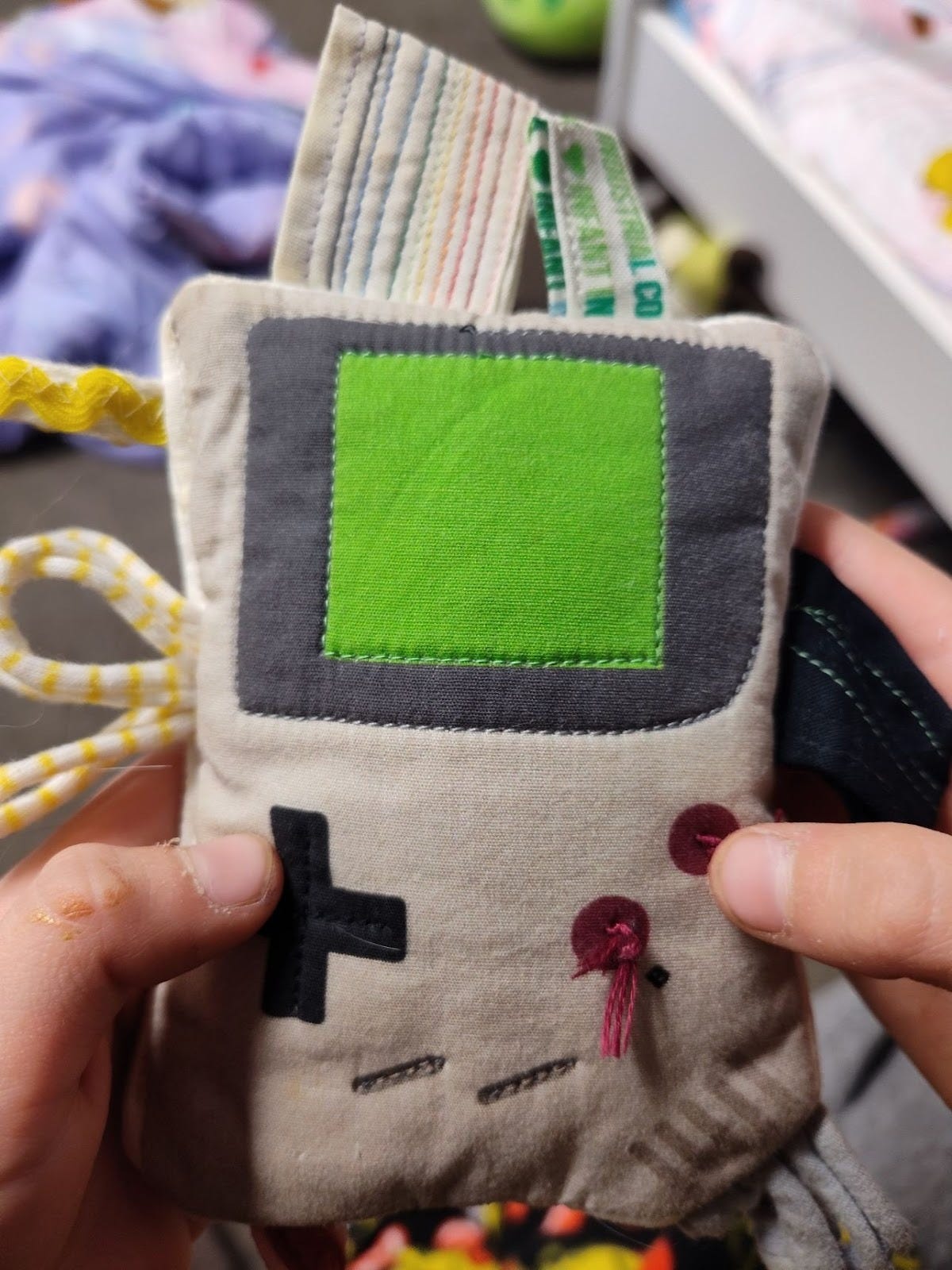
As the device we selected is best suited for Super Nintendo/Game Boy Advance games, that’s where I focused the game curation. The basic principles here can be applied to any library of games.
Self-Guided Difficulty Curve
“I get knocked down, but I get up again”
-Chumbawamba, “Tubthumping” 1997


Difficulty in games is a frequent topic of discourse, especially for new players. A selection of score attack titles will circumvent this by providing a smooth responsive difficulty curve that matches skill growth in the player. Reaching a new high score will be a bar that the child will set themselves and feel accomplished every time it’s surpassed.
Outside of the “things falling down” mechanic found in Tetris or Dr. Mario, classic arcade games such as Ms. Pac-Man or Frogger require handling more chaos to progress. While the games like Mario Picross or Push-Over, focus on logic-based challenges.
Dr. Mario had the honour of being the first selection. Despite having never seen any of these games before, or receiving any guidance from us, besides “match colors,” they were an immediate success. The following days were filled with my child delightfully putting their name in for every new high score and then showing it to me or my partner (who was coincidentally building a Game Boy at the time). The only hiccups were occasionally getting stuck in a menu for two play modes.
“I got a new high score!” he said, while gleefully entering their name into the score list.
Start With Already Known Games
“It’s a Unix system, I know this“
- Lex Murphy, “Jurassic Park” 1993


Sports games, especially those featuring popular mascots, remove the first major hurdle for a games conveyance, by relying on the established outside rules of the base sport. It’s a major factor for the pickup and play success of Wii Sports. These titles will allow the player to focus on building confidence in the device and button layouts.
From Super International Cricket to Super Black Bass, nearly every sport or sport-adjacent activity has an offering in the 16-bit era. For younger players with developing math and reading skills, arcade-style offerings will be more approachable over simulation titles.
Adding pinball variants to the roster of games was an immediate success, likely due to having built multiple pinball kits before receiving the console. Surprisingly, Mario Kart performed worse than expected.
“It’s a lot harder to turn,” he said, playing Mario Kart without Steering Assist for the first time.
Getting Your Feet Under You
“It’s just a jump to the left. And then a step to the right”
-Richard O’Brien, “Time Warp” 1975


Moving left to right may make platformers appear deceptively simple, but they are a discrete step up in multitasking and spatial reasoning. Checkpoints and unlimited continues are the bare minimum when just starting out. Selecting games without level timers will remove a major stress factor for learning players. Titles that use a level select/world map also provide a very clean metric for overall progress and optional routes.
Similar to sports titles, start with a selected entry from any given franchise and wait to see what tastes evolve before adding additional titles. This may not be the first game in the series, as many sequels are more refined experiences.
Platformers came a bit later, and that was where my child’s skills started to falter. Pressing/holding buttons to modify actions is a new complexity in play that has resulted in some hard skill checks. Even though they have successfully walked Mario through a half dozen levels, for now most play time has returned to the previous categories of games.
“It’s hard to keep the baby safe,” he said, playing Yoshi’s Island and being unintentionally poignant.
Explorative Play
“You’re on your own. And you know what you know.
And YOU are the guy who’ll decide where to go.”
- Dr. Seuss, ‘Oh, the Places You’ll Go!’ 1990
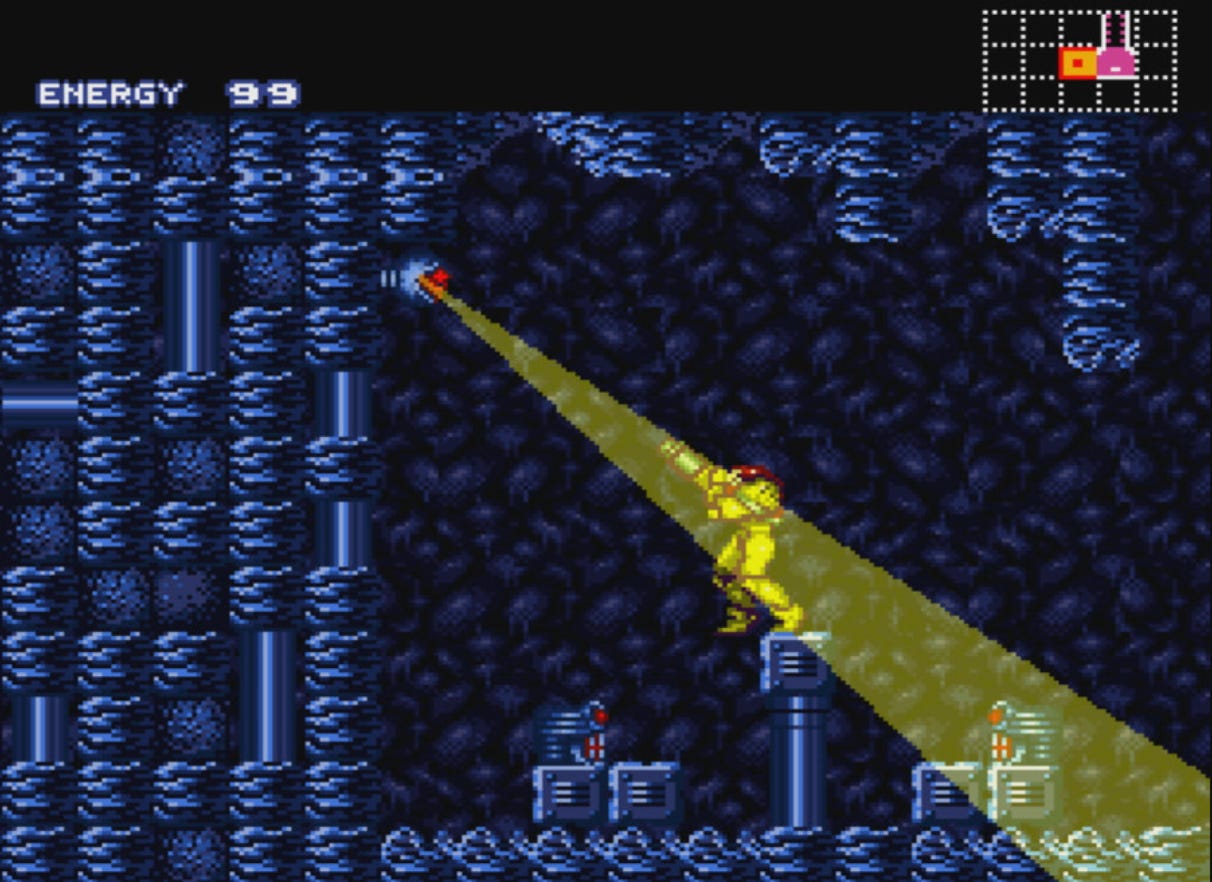
At a certain point, as with all things as a parent, it will be time to let go. Exploration-based games bring fully realized worlds with nooks and crannies that intentionally allow players to get lost and confused.
These games will require players to carry knowledge across multiple play sessions, creating a great opportunity to include note taking, particularly if there are long gaps between screen time.
Pokemon Ruby was the only explorative game we introduced to our child, with mixed success. There was an early win when setting the in-game analog clock, but after that the reading was above their level. Managing resources for pokémon health and in-game currency was also a new challenging scope of play.
“This is like my watch!,” he said, excitingly setting the in-game clock for Pokémon Ruby
Growing Together
“And now for a taste of things to come.”
George S. Clinton, “A Taste of Things to Come“ 1995
We have discovered a lot about our child in just a short amount of time as we observed their exploration of a hobby both parents love. Even the small joy of watching a gamer “handle” evolve as name entry changed from: their name, to a name variation, to made up names. Selfishly, I’m happy that the open world and RPG games are still out of reach of my child’s solo play, keeping our family couch play alive in these genres. The only major downside is now on weekend mornings both the kid (their device) and their mom (Steam Deck) are playing games in the “big bed” while I try to sleep in.
References:
From Game Jam to the Creation of Starlink: Battle for Atlas - Matthew Rose, GDC
Character Balance in Skylanders: More than the Numbers - Robert Gallerani, GDC
Sequelitis - Mega Man Classic vs. Mega Man X - Egoraptor
 | A guest post by
|